Skip to content

Cloud technology is everywhere now and it is changing the way we work, store files, and even how we stream our favorite shows. Some people still think using the cloud is risky or complicated. The real shock is that over 94 percent of businesses already use cloud services daily, and most people use it without even realizing, from messaging apps to streaming music.
Table of Contents
- Understanding The Basics Of Cloud Technology
- The Importance Of Cloud Computing Today
- How Cloud Technology Facilitates Data Access
- Key Concepts Behind Cloud Services
- Practical Applications Of Cloud Technology In Daily Life
Quick Summary
| Takeaway | Explanation |
|---|---|
| Cloud technology enables remote data access. | Users can store and access data from anywhere via the internet, improving flexibility and collaboration. |
| It offers scalable computing resources. | Businesses can easily adjust resources up or down, optimizing costs and meeting demands without heavy investments. |
| Cloud services enhance collaboration. | Teams can work on shared documents simultaneously, improving productivity regardless of geographical location. |
| Robust security measures protect data. | Advanced protocols ensure sensitive information remains secure while accessible to authorized users. |
| Cloud technology drives digital transformation. | Companies leverage cloud capabilities to innovate, reduce costs, and enhance operational efficiency. |
Understanding the Basics of Cloud Technology
Cloud technology represents a transformative approach to computing that enables individuals and organizations to access and store data and applications remotely through internet-connected servers. Instead of managing physical infrastructure and local storage, users can leverage powerful distributed networks that provide flexible, scalable, and cost-effective computing resources.
This table organizes the five essential characteristics of cloud computing, giving a clear reference for what sets it apart from traditional IT.
| Characteristic | Description |
|---|---|
| On-demand self-service | Users provision computing capabilities automatically without provider interaction |
| Broad network access | Resources are available over the network and accessed via standard means |
| Resource pooling | Provider’s resources serve multiple consumers, with dynamic assignment |
| Rapid elasticity | Capabilities can scale quickly with demand |
| Measured service | Automatic control and optimization of resource usage |
What Exactly is Cloud Technology?
At its core, cloud technology is a model of computing where servers, storage, databases, networking, software, and more are delivered over the internet. According to the National Institute of Standards and Technology (NIST), cloud computing is characterized by five essential attributes:
- On-demand self-service: Users can automatically provision computing capabilities without requiring human interaction with service providers
- Broad network access: Computing resources are available over the network and accessible through standard mechanisms
- Resource pooling: The provider’s computing resources are combined to serve multiple consumers simultaneously
- Rapid elasticity: Capabilities can be quickly scaled up or down based on demand
- Measured service: Cloud systems automatically control and optimize resource usage
How Cloud Technology Works
Cloud technology operates through a network of remote servers hosted on the internet, which store, manage, and process data instead of using a local server or personal computer. These servers are housed in massive data centers worldwide, allowing users to access their information and applications from any device with an internet connection.
The following table summarizes the three main cloud service models described in the article, allowing readers to quickly compare their purpose and primary benefits.
| Service Model | What It Provides | Primary Benefit |
|---|---|---|
| Infrastructure as a Service (IaaS) | Virtualized computing resources (servers, storage, networking) | Flexibility and scalability |
| Platform as a Service (PaaS) | Development and deployment environments (hardware/software tools) | Simplifies app development |
| Software as a Service (SaaS) | Software applications delivered via the internet | Immediate, easy access to apps |
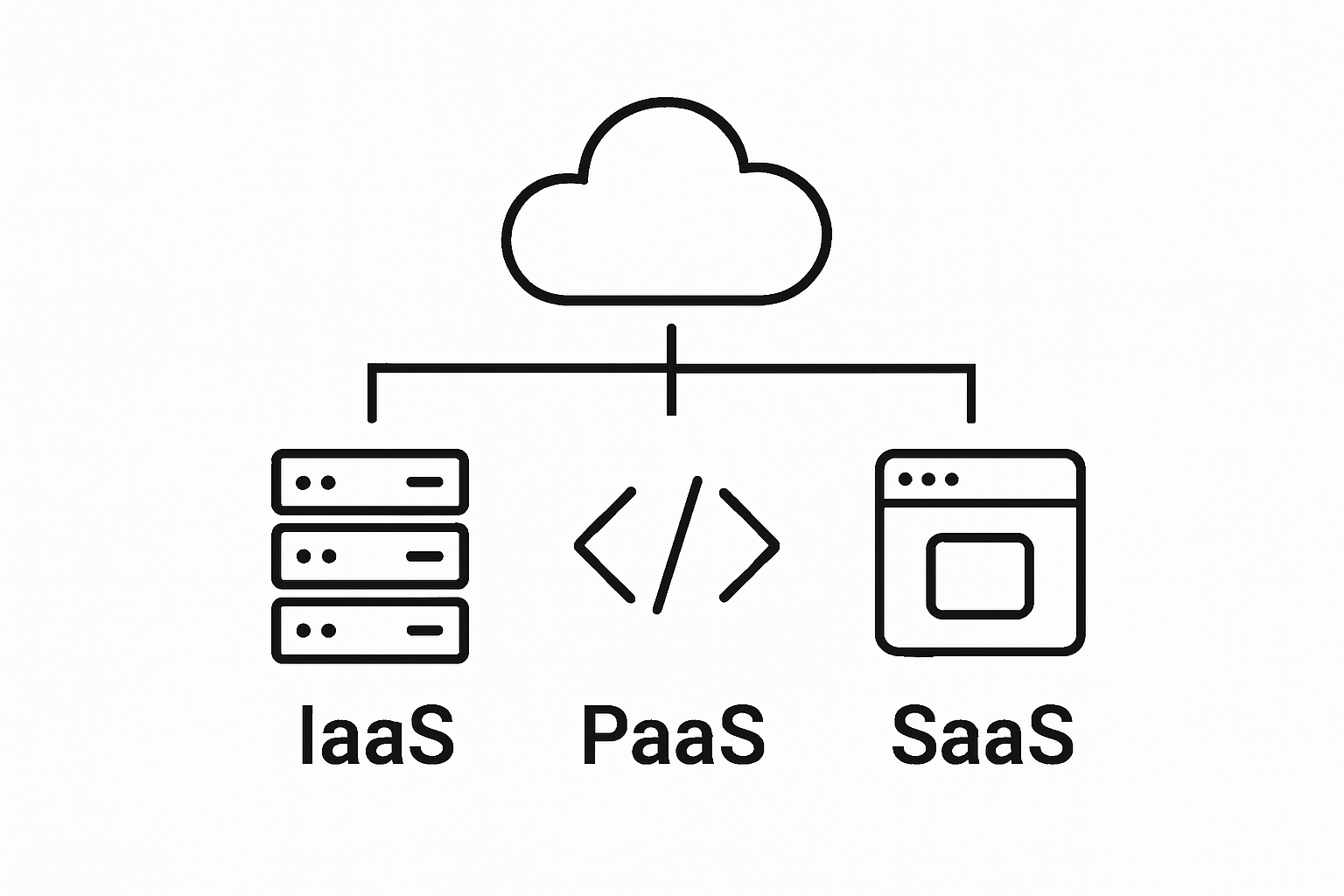
The infrastructure typically involves three primary service models
 :
:
- Infrastructure as a Service (IaaS): Provides virtualized computing resources over the internet
- Platform as a Service (PaaS): Offers hardware and software tools accessible via the web
- Software as a Service (SaaS): Delivers software applications over the internet
By leveraging cloud technology, businesses and individuals can reduce infrastructure costs, increase flexibility, and access powerful computing resources without significant upfront investments in hardware and maintenance.
The Importance of Cloud Computing Today
Cloud computing has revolutionized how businesses and individuals approach technology, transforming traditional computing paradigms and offering unprecedented flexibility, efficiency, and scalability. In an increasingly digital world, cloud computing has become a critical infrastructure that supports innovation, collaboration, and global connectivity.
Driving Business Transformation
According to Gartner Research, cloud computing is no longer just a technological option but a strategic imperative for organizations seeking competitive advantage. Companies across industries are leveraging cloud technologies to:
- Accelerate digital transformation: Enable rapid deployment of new technologies and services
- Reduce operational costs: Minimize infrastructure and maintenance expenses
- Enhance scalability: Quickly adjust computing resources based on business needs
- Improve collaboration: Enable seamless remote work and global team integration
Economic and Technological Impact
The economic significance of cloud computing extends far beyond simple cost savings. Cloud technologies have democratized access to advanced computing resources, allowing small businesses and startups to compete with larger enterprises. By providing access to sophisticated technologies like artificial intelligence, machine learning, and big data analytics, cloud computing levels the playing field and drives innovation.
Global Connectivity and Accessibility
Cloud computing has fundamentally changed how we interact with technology. Remote work, global collaboration, and instant access to information have become possible due to cloud infrastructure. Students, professionals, and organizations can now access powerful computing resources from anywhere in the world, breaking down geographical barriers and creating new opportunities for learning, communication, and business growth.
As digital transformation continues to accelerate, cloud computing will remain a cornerstone of technological innovation, enabling more flexible, efficient, and interconnected systems that drive progress across multiple sectors.
How Cloud Technology Facilitates Data Access
Cloud technology has dramatically transformed how individuals and organizations access, store, and manage digital information, creating a seamless and flexible environment for data interaction. By eliminating traditional physical storage limitations, cloud platforms enable unprecedented levels of data accessibility, collaboration, and security.
Universal Data Accessibility
According to the National Institutes of Health, cloud technology provides equal access to computational resources regardless of an individual’s institutional environment. This universal accessibility means users can retrieve their data from any device with an internet connection, breaking down geographical and technological barriers.
Key features of cloud data access include:
- Instant retrieval: Access data from anywhere, anytime
- Cross-device compatibility: Seamless integration across smartphones, tablets, and computers
- Real-time synchronization: Automatic updates across all connected devices
Security and Data Protection
Cloud platforms implement robust security mechanisms to protect digital information. Advanced encryption protocols, multi-factor authentication, and continuous monitoring ensure that sensitive data remains protected while remaining easily accessible to authorized users. These security measures provide organizations and individuals with confidence in their data management strategies.
Collaborative Data Environments
Cloud technology creates dynamic collaborative spaces where multiple users can simultaneously access, edit, and share information. Research teams, business departments, and global workforces can now work on shared documents and projects in real-time, regardless of their physical location. This collaborative approach enhances productivity, speeds up decision-making processes, and creates more interconnected work environments.
By democratizing data access and providing powerful, secure infrastructure, cloud technology continues to revolutionize how we interact with digital information, making complex data management simple and intuitive.
Key Concepts Behind Cloud Services
Cloud services represent a sophisticated technological ecosystem that fundamentally transforms how computing resources are delivered, managed, and consumed. By reimagining traditional IT infrastructure, cloud services provide flexible, scalable, and cost-effective solutions for businesses and individuals alike.
Service Model Architecture
According to the National Institute of Standards and Technology, cloud services are structured around three primary deployment models that cater to different organizational needs:
- Infrastructure as a Service (IaaS): Provides virtualized computing resources over the internet
- Platform as a Service (PaaS): Offers development and deployment environments
- Software as a Service (SaaS): Delivers complete application solutions via the cloud
Architectural Principles
Cloud services operate on fundamental architectural principles that distinguish them from traditional computing models. These principles ensure maximum efficiency, flexibility, and reliability. The core architectural foundations include resource pooling, where computing resources are dynamically allocated based on demand, and multi-tenancy, which allows multiple users to share the same physical infrastructure while maintaining strict data isolation and security.
Scalability and Elasticity
Unlike traditional computing models, cloud services offer unprecedented scalability and elasticity. Organizations can rapidly scale their computing resources up or down based on immediate requirements, paying only for the resources they consume. This dynamic resource allocation eliminates the need for significant upfront hardware investments and allows businesses to respond quickly to changing technological demands.
By integrating advanced technologies like virtualization, distributed computing, and automated resource management, cloud services have revolutionized how we conceptualize and utilize computational power, making sophisticated technological capabilities accessible to organizations of all sizes.
Practical Applications of Cloud Technology in Daily Life
Cloud technology has seamlessly integrated into our everyday experiences, transforming how we work, communicate, learn, and entertain ourselves.
 What was once considered advanced technology has now become an invisible yet powerful infrastructure supporting numerous aspects of modern living.
Personal and Professional Communication
According to Southern New Hampshire University, cloud services power essential communication platforms that connect people globally. These technologies enable:
- Instant messaging: Real-time communication across devices
- Video conferencing: Seamless virtual meetings and collaborations
- File sharing: Effortless document and media exchange
Entertainment and Media Consumption
Cloud technology revolutionizes how we consume and interact with entertainment. Streaming services like Netflix, Spotify, and Disney+ leverage cloud infrastructure to deliver personalized content experiences. Users can access their favorite movies, music, and shows from multiple devices, with preferences and watch history synchronized across platforms.
Learning and Professional Development
Educational platforms and professional training have been dramatically transformed by cloud technologies. Online learning management systems, virtual classrooms, and collaborative tools enable students and professionals to access educational resources from anywhere. Learn more about daily efficiency strategies that complement these technological advancements.
By making sophisticated technological capabilities accessible and user-friendly, cloud technology continues to reshape our digital interactions, making complex systems feel intuitive and seamless.
Bring Cloud Technology Solutions Into Your Daily Routine
Are you tired of juggling tech problems, like streaming errors or Wi-Fi issues, just as you are getting excited about the possibilities of cloud technology? This article highlighted how cloud services provide accessibility, collaboration, and flexibility. But technology is only as useful as your ability to handle its everyday challenges. When your digital life hits a snag, frustration builds up fast. You deserve simple solutions that get you back to enjoying seamless data access and efficiency.
At BreezyTips.com, we specialize in taking complicated tech issues and breaking them down into clear steps that anyone can follow. Want to tackle streaming hiccups or boost your household productivity the same way cloud tech boosts business? Find practical guides and clever hacks to make your daily routines smoother. Visit BreezyTips.com today to simplify your tech life and experience the day-to-day benefits of cloud innovation right now. Get started and see how a single tip can change everything.
Frequently Asked Questions
What is cloud technology?
Cloud technology is a computing model that allows individuals and organizations to access and store data and applications remotely through internet-connected servers, rather than relying on local infrastructure.
How does cloud computing benefit businesses?
Cloud computing allows businesses to reduce operational costs, accelerate digital transformation, scale resources rapidly, and improve collaboration among teams, enabling them to stay competitive in a fast-paced market.
What are the main service models of cloud computing?
The main service models of cloud computing are Infrastructure as a Service (IaaS), which provides virtualized computing resources; Platform as a Service (PaaS), which offers development and deployment environments; and Software as a Service (SaaS), which delivers software applications over the internet.
How does cloud technology enhance data accessibility?
Cloud technology enhances data accessibility by allowing users to retrieve their data from any device with an internet connection, ensuring instant access, cross-device compatibility, and real-time synchronization of information.