Skip to content

Cloud solutions are everywhere now and they handle everything from streaming your favorite shows to running massive business operations. What might surprise you is that more than 90 percent of companies in the US now rely on some form of cloud computing. Most people think the cloud is just about storage or saving files online but the real story is how these systems allow instant flexibility security and access that old tech simply cannot match.
Table of Contents
- What Are Cloud Solutions? A Basic Explanation
- Why Cloud Solutions Matter In Today’s Digital World
- How Cloud Solutions Work: The Technology Behind Them
- Key Concepts Of Cloud Solutions: Types And Benefits
- Real-World Applications Of Cloud Solutions In Everyday Life
Quick Summary
| Takeaway | Explanation |
|---|---|
| Cloud solutions provide scalable resources | Users can easily adjust computing power according to their needs, offering flexibility for businesses and individuals alike. |
| Cloud computing enhances cost-effectiveness | Significant reductions in hardware costs and maintenance simplify operational expenses for organizations transitioning to digital solutions. |
| Accessibility is a key benefit | With cloud solutions, users can access data and applications globally, enabling remote work and collaboration from any location with internet. |
| Cloud services drive technological democratization | Small businesses and startups gain access to high-end computing resources, fostering innovation and competition across various markets. |
| Multiple deployment models meet diverse needs | Depending on organizational requirements, options like public, private, hybrid, or community clouds offer tailored cloud infrastructures for different security and management preferences. |
What Are Cloud Solutions? A Basic Explanation
Cloud solutions represent a transformative approach to computing and data management that has revolutionized how businesses and individuals store, access, and process digital information. At its core, cloud computing provides a flexible, scalable method of delivering computing services over the internet, eliminating the need for local hardware and software management.
Understanding Cloud Infrastructure
Cloud solutions fundamentally work by allowing users to access computing resources through remote servers hosted on the internet. Instead of maintaining physical servers or personal computer infrastructure, organizations and individuals can leverage powerful, distributed computing networks that provide on-demand access to storage, processing power, and applications.
The National Institute of Standards and Technology defines cloud computing as a model enabling convenient, on-demand network access to a shared pool of configurable computing resources. These resources can be rapidly provisioned and released with minimal management effort.
Key Characteristics of Cloud Solutions
Cloud solutions are distinguished by several critical features that make them attractive for modern digital needs:
- Scalability: Easily expand or reduce computing resources based on current requirements
- Cost-Effectiveness: Eliminate significant upfront hardware investments
- Accessibility: Access data and applications from anywhere with internet connectivity
- Reliability: Distributed infrastructure provides enhanced data redundancy and backup
By leveraging cloud solutions, businesses and individuals can transform their digital capabilities, creating more agile, efficient, and responsive technological ecosystems that adapt quickly to changing needs.
Why Cloud Solutions Matter in Today’s Digital World
In an increasingly interconnected and data-driven global landscape, cloud solutions have emerged as a critical technological infrastructure that powers digital transformation across industries. These innovative computing platforms are not merely technological tools but strategic assets that enable organizations and individuals to compete, innovate, and adapt in a rapidly evolving digital ecosystem.
Economic and Operational Advantages
Cloud solutions provide significant economic benefits by dramatically reducing infrastructure costs and operational complexity. Traditional IT models required substantial upfront investments in hardware, software, and maintenance. The World Bank highlights that cloud infrastructure enables efficient and cost-effective data management, which is particularly transformative for organizations seeking scalable technological capabilities.
Enabling Digital Innovation and Flexibility
Modern businesses and entrepreneurs require technological platforms that can quickly adapt to changing market demands. Cloud solutions offer unprecedented flexibility by allowing organizations to:
- Scale computing resources instantly
- Reduce technological barriers to entry
- Implement advanced technologies like artificial intelligence and machine learning
- Support remote work and global collaboration
Global Accessibility and Technological Democratization
Cloud computing represents a powerful equalizer in the digital landscape. By removing substantial technological and financial barriers, cloud solutions enable small businesses, startups, and individual professionals to access enterprise-grade computing resources. This democratization means that innovative ideas can be developed and scaled without requiring massive capital investments, creating opportunities for global economic participation and technological innovation.
Ultimately, cloud solutions are not just technological infrastructure but strategic platforms that enable organizations and individuals to transform digital potential into tangible competitive advantages.
How Cloud Solutions Work: The Technology Behind Them
Cloud solutions operate through a sophisticated network of interconnected servers, data centers, and advanced computing technologies that transform how digital resources are stored, processed, and accessed. These complex systems enable seamless, scalable computing experiences that transcend traditional hardware limitations.
Infrastructure and Architecture
At the heart of cloud computing are massive data centers strategically located around the world. The University of Central Florida explains that these centers deliver shared, on-demand computing services over the internet, including servers, storage, databases, networking, software, analytics, and intelligence. These data centers use virtualization technology to create multiple virtual machines that can be dynamically allocated and reallocated based on user needs.
Cloud Service Delivery Models
Cloud solutions are typically delivered through three primary service models that cater to different technological requirements
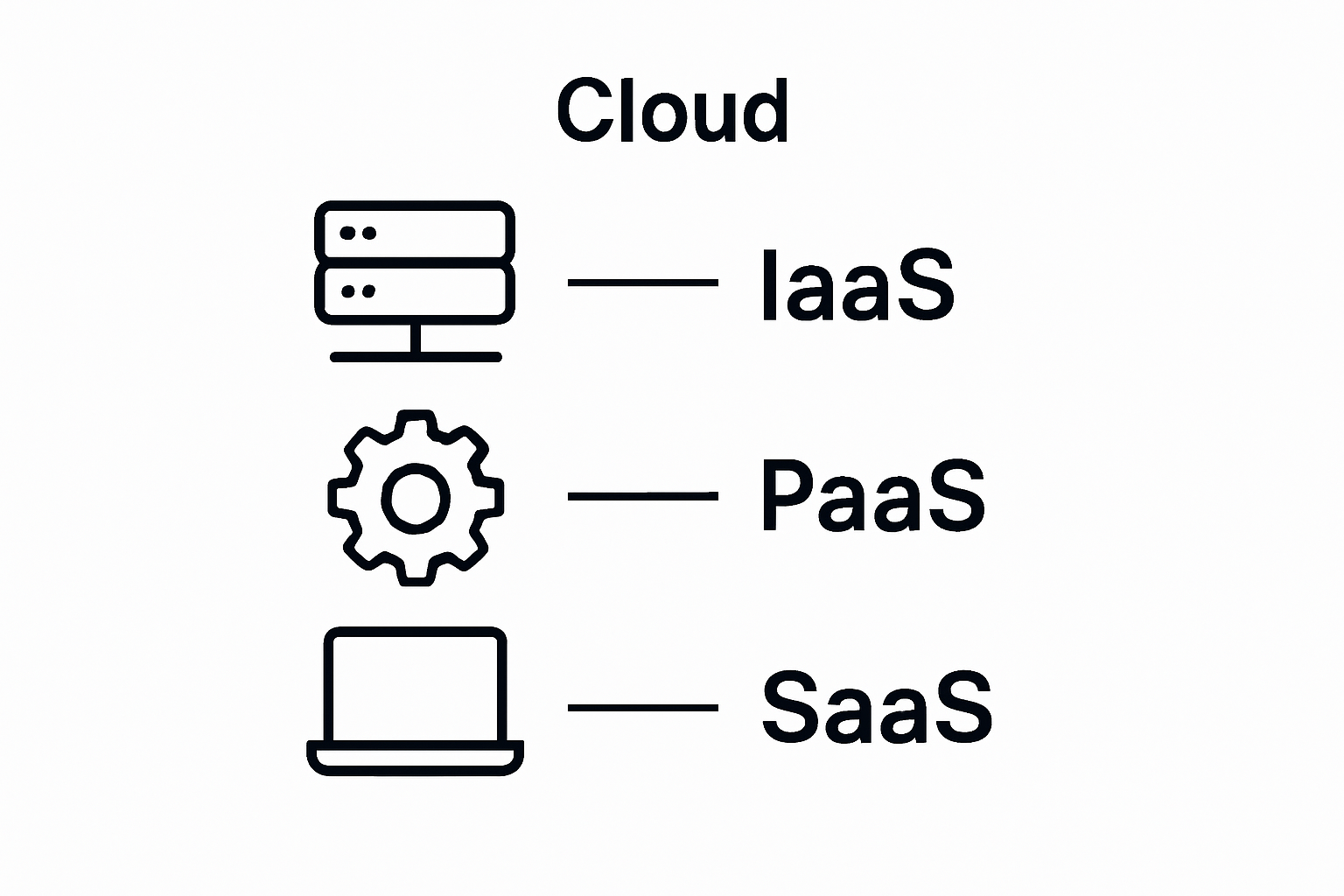 :
:
- Infrastructure as a Service (IaaS): Provides virtualized computing resources over the internet
- Platform as a Service (PaaS): Offers development and deployment environments
- Software as a Service (SaaS): Delivers complete software applications via the cloud
Security and Data Management
Cloud technologies implement robust security protocols to protect user data and ensure reliable performance. Advanced encryption, multi-factor authentication, and distributed backup systems create multiple layers of protection. Users can access their data and applications from anywhere with internet connectivity, while cloud providers manage the complex underlying infrastructure.
The technology behind cloud solutions represents a paradigm shift in computing, transforming how organizations and individuals interact with digital resources by providing flexible, scalable, and secure technological ecosystems.
Key Concepts of Cloud Solutions: Types and Benefits
Cloud solutions represent a complex ecosystem of technological services designed to provide flexible, scalable, and efficient computing resources. Understanding the various types and benefits helps organizations and individuals make informed decisions about leveraging cloud technologies for their specific needs.
Cloud Deployment Models
Cloud computing offers multiple deployment strategies that cater to different organizational requirements and security considerations. The National Institute of Standards and Technology identifies four primary deployment models that define how cloud infrastructure can be organized and accessed:
- Public Cloud: Shared infrastructure managed by third-party providers
- Private Cloud: Dedicated infrastructure for a single organization
- Hybrid Cloud: Combination of public and private cloud environments
- Community Cloud: Shared infrastructure for specific groups or industries
Service Categories and Functionality
Cloud solutions are typically categorized into three primary service models, each offering distinct levels of management and control:
- Infrastructure as a Service (IaaS): Provides virtualized computing resources
- Platform as a Service (PaaS): Offers development and deployment environments
- Software as a Service (SaaS): Delivers complete software applications
Strategic Benefits of Cloud Technologies
Beyond technical capabilities, cloud solutions provide strategic advantages that transform how organizations approach digital infrastructure. By eliminating substantial upfront hardware investments and providing on-demand scalability, businesses can allocate resources more efficiently. Cloud technologies enable faster innovation, support global collaboration, and create opportunities for organizations to adapt quickly to changing technological landscapes.
The versatility of cloud solutions means they can be tailored to meet the unique requirements of businesses across various industries, from small startups to large enterprises.
Below is a comparison table that outlines the four main cloud deployment models described in the article, highlighting who manages the infrastructure and the primary use cases for each.
| Deployment Model | Managed By | Infrastructure Sharing | Typical Use Case |
|---|---|---|---|
| Public Cloud | Third-party Provider | Shared across many users | Startups, cost-sensitive businesses |
| Private Cloud | Single Organization | Dedicated to one organization | Large enterprises, security-focused |
| Hybrid Cloud | Both (combination) | Mix of dedicated and shared | Businesses needing both flexibility |
| Community Cloud | Specific Group(s) | Shared within a community | Industry groups, regulated sectors |
Real-World Applications of Cloud Solutions in Everyday Life
Cloud solutions have seamlessly integrated into our daily experiences, transforming how we work, communicate, store information, and interact with technology. From personal entertainment to professional productivity, cloud technologies have become an invisible yet powerful infrastructure supporting modern digital lifestyles.
Personal and Entertainment Applications
In our personal lives, cloud solutions power numerous everyday experiences. Streaming services like Netflix and Spotify leverage cloud infrastructure to deliver personalized content across multiple devices. Photo storage services such as Google Photos and iCloud allow users to securely backup and access memories from anywhere, while collaborative platforms like Google Docs enable real-time document sharing and editing.
Professional and Business Transformations
The Federal Highway Administration highlights how cloud computing extends beyond personal use into critical professional applications. Industries ranging from transportation to healthcare utilize cloud technologies to:
- Enable remote work capabilities
- Support complex data analysis
- Facilitate secure information sharing
- Provide scalable computing resources
Healthcare and Educational Innovations
Cloud solutions are revolutionizing critical sectors like healthcare and education. Telemedicine platforms use cloud infrastructure to connect patients with healthcare providers, while educational institutions leverage online learning management systems to deliver courses globally. These technologies enable unprecedented accessibility and efficiency in daily household management, making complex services more user-friendly and adaptable.
As cloud technologies continue evolving, they promise to make our digital interactions more seamless, personalized, and interconnected, fundamentally reshaping how we live, work, and learn.

Ready to Make Cloud Simplicity Work for You?
Have you ever felt overwhelmed by the thought of managing your digital life, struggling to make the most of cloud solutions, or worried about data loss and constant tech errors? The article you just read breaks down how cloud solutions transform everyday challenges like storage, remote access, and device reliability. When your tech should be easy but instead causes stress, it is time to take action.
At BreezyTips.com, we turn complex topics like cloud computing into easy, actionable steps that anyone can follow. Discover practical guides for fixing streaming glitches, boosting Wi-Fi reliability, and using the cloud to keep your important files safe and accessible. Take control of your digital world and get ahead of future tech issues. Start making smarter, faster choices today by visiting BreezyTips.com and see how our clear solutions turn the cloud into your everyday advantage.
Frequently Asked Questions
What are cloud solutions?
Cloud solutions refer to a flexible and scalable method of delivering computing services over the internet, allowing users to access storage, processing power, and applications without maintaining local hardware.
What are the key characteristics of cloud solutions?
Cloud solutions are characterized by scalability, cost-effectiveness, accessibility, and reliability, making them attractive for modern businesses and individuals.
What are the different types of cloud service delivery models?
The primary cloud service delivery models are Infrastructure as a Service (IaaS), Platform as a Service (PaaS), and Software as a Service (SaaS), each catering to different technological requirements.
How do cloud solutions support digital innovation?
Cloud solutions enable businesses to scale resources instantly, reduce technological barriers to entry, implement advanced technologies like AI and machine learning, and support remote work, fostering digital innovation.