Skip to content
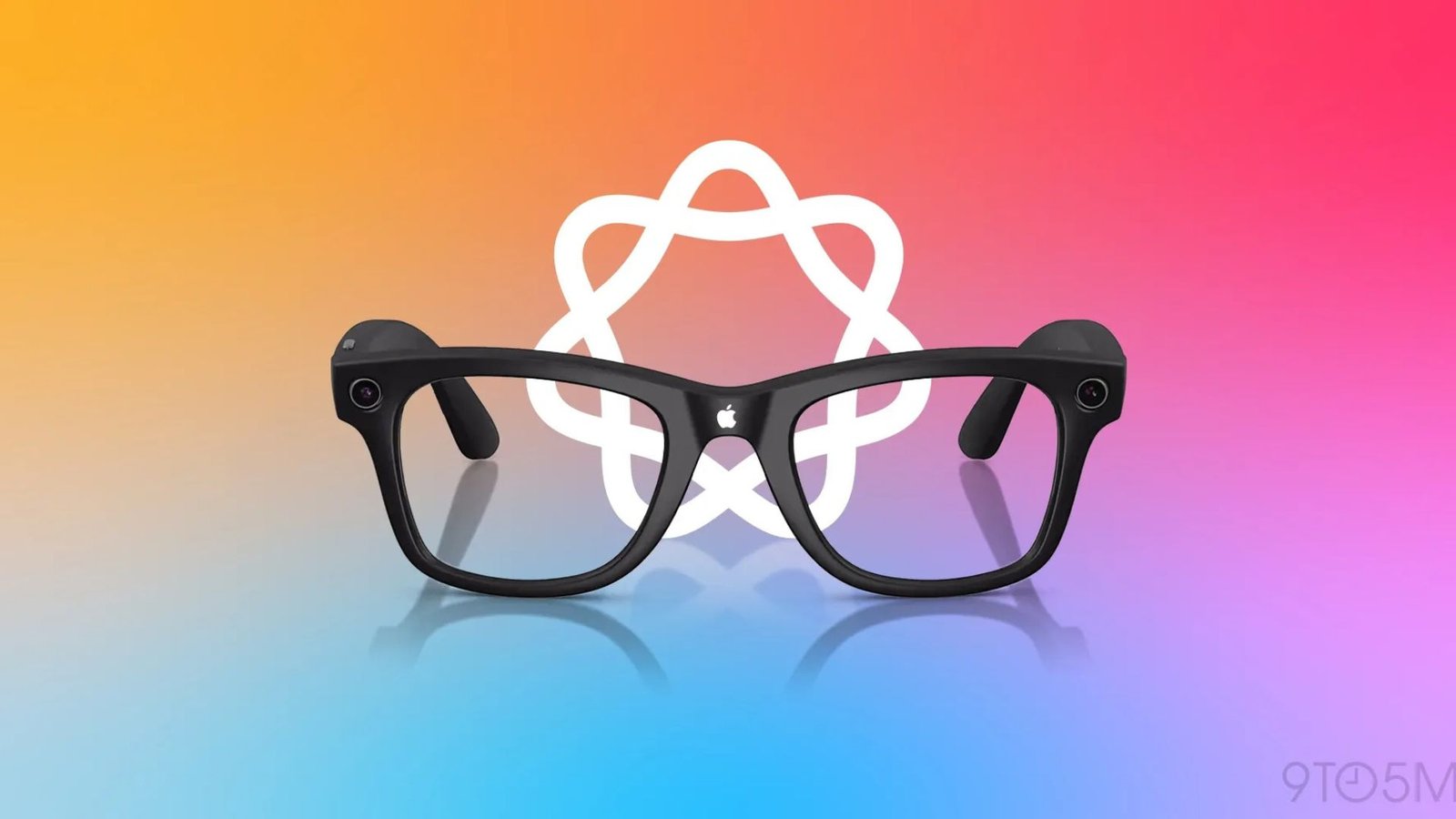
In a definitive move that redefines its strategy for the next generation of wearable technology, Apple has reportedly scrapped the long-rumored, lighter successor to the Vision Pro—often referred to as the “Vision Air”—to focus all its resources on an entirely different device: AI Smart Glasses.
This is more than just a product cancellation; it’s a strategic pivot toward an AI-first future. Instead of refining its expensive, immersive spatial computing headset for the masses, Apple is prioritizing a discreet, everyday pair of smart glasses heavily reliant on artificial intelligence. With a potential launch slated for late 2026, the company aims to deliver a breakthrough AI device that challenges rivals like Meta and Google on the street, not just in the home.
The decision signals Apple’s realization that the immediate future of mass-market wearables lies not in bulky virtual reality, but in sleek, practical, voice-controlled AI Smart Glasses. This blog delves into the reasons behind the shelving of Vision Air, the core features of the upcoming AI Smart Glasses, and what this aggressive timeline means for the rest of the tech industry.
Table of Contents
The Strategic Pivot: Why Vision Air Was Shelved
For months, the tech world had speculated about the “Vision Air,” a hypothetical device designed to address the two primary criticisms of the original Vision Pro: its high cost (starting at $3,499) and its considerable weight and bulk. The Vision Air was expected to be a slimmed-down, more affordable version, perhaps launching around 2027.
However, sources like Bloomberg have confirmed that Apple has now put the Vision Air project on hold, transitioning the engineering team to the faster-tracked AI Smart Glasses initiative. This bold decision is rooted in several critical business and technological realities:
1. The Realities of Spatial Computing
While the Vision Pro has been praised as a marvel of engineering, its current form factor and price point keep it firmly in the niche category of early adopter and professional use. An attempt to create a “Vision Air” would still require complex, heavy, and expensive optical components, pushing the product’s price well above the mass-market ceiling and potentially failing to solve the comfort issue entirely. Apple likely concluded that a slightly lighter Vision headset wouldn’t be a meaningful jump for most consumers.
2. Accelerating the AI Race
The most compelling factor is the surging demand for practical, always-on artificial intelligence. The success of rivals like Meta with their Ray-Ban smart glasses—which focus on hands-free photo capture and basic AI assistance—demonstrated a clear market appetite for stylish, subtle, voice-first wearables. Apple recognized that delaying the launch of its own AI Smart Glasses meant conceding the rapidly evolving AI platform war to its rivals.
The company needs a platform to showcase its major overhaul of Siri and its proprietary “Apple Intelligence” features. A phone-dependent, camera-and-mic-equipped pair of AI Smart Glasses is the ideal, non-distracting vehicle for this next-generation conversational AI, allowing users to interact with Apple Intelligence simply by speaking a command.
Introducing Apple’s AI Smart Glasses: The 2026 Strategy
The core purpose of Apple’s upcoming AI Smart Glasses is fundamentally different from the Vision Pro. It’s not about displaying immersive virtual screens; it’s about providing seamless, contextual, hands-free information and assistance—making your iPhone less necessary to pull out of your pocket.
Key Features and Functionality
The first generation of Apple’s AI Smart Glasses is expected to be minimalist and highly focused, targeting a late 2026 release date. Key rumored features include:
- No Integrated Display (Initially): Unlike AR glasses, the initial model of these AI Smart Glasses will reportedly lack a display for projecting images or text onto the lenses. This crucial omission is what allows them to be lighter, more energy-efficient, and—most importantly—look more like regular eyewear.
- Deep Siri and AI Integration: The device will be the primary access point for Apple Intelligence. It will rely heavily on voice interaction, allowing users to ask complex contextual questions, receive real-time translation, and get turn-by-turn directions all without looking at a screen. The sophistication of the AI Smart Glasses will hinge entirely on the capability of the overhauled Siri.
- Cameras and Microphones: The glasses will house multiple cameras, high-quality microphones, and speakers. These components are essential for two main functions:
- Contextual Awareness: The camera can analyze the wearer’s environment (e.g., identify an object, read a sign) and feed that data to the AI.
- Media Capture: Enabling hands-free photography and video recording, directly challenging the successful media capabilities of Meta’s current product.
- iPhone Reliance: The first generation of AI Smart Glasses will be tethered to an iPhone for the heavy-lifting of processing and connectivity, similar to the initial Apple Watch models. This design choice helps keep the glasses themselves lightweight and maximizes battery life, making them viable for all-day wear.
The Design and Comfort Imperative
For a product to be worn all day, it must pass the fashion and comfort test. The decision to prioritize this form of AI Smart Glasses allows Apple to leverage its renowned industrial design expertise to create a frame that is both stylish and discrete. This is critical for mainstream adoption. Consumers are far more likely to accept a subtle pair of AI Smart Glasses that look like a fashionable accessory than a heavy headset. This new category of wearable is about subtle empowerment, not digital immersion. The successful integration of such technology into an everyday item, such as a watch or glasses, is often a more significant market opportunity than a dedicated, single-use device.
The “AI Smart Glasses” Difference: Beyond Augmented Reality
The key distinction between Apple’s various headset projects lies in their core utility.
The Vision Pro (and the proposed Vision Air) is an XR/Spatial Computing device. Its purpose is to replace or enhance the screen by displaying a virtual interface in the real world. It’s a tool for work, entertainment, and immersion.
The new AI Smart Glasses are a Conversational/Contextual AI device. Their purpose is to replace the need to interact with a screen altogether by acting as a hands-free conduit to an intelligent assistant. They are designed for convenience, information retrieval, and passive interaction.
This means the success of the AI Smart Glasses is entirely dependent on Apple’s software revolution.
The Role of Apple Intelligence
The timing of the AI Smart Glasses launch aligns perfectly with the rumored debut of Apple’s comprehensive AI overhaul, Apple Intelligence. This new system is expected to feature a radically more capable Siri, built on large language models (LLMs), that can understand context, manage multi-step requests, and analyze visual data from the cameras in the glasses.
Imagine walking into a grocery store wearing your AI Smart Glasses. You could simply ask, “Siri, where is the almond milk I usually buy?” and Siri, leveraging its knowledge of your shopping history and the current visual data from the glasses, could verbally guide you to the correct aisle without you ever needing to pull out a shopping list on your phone. This is the promise of truly ubiquitous AI Smart Glasses: intelligence that works proactively in the background, available instantly via voice.
This approach is what sets the first generation of Apple’s AI Smart Glasses apart from the Vision Pro and places them in direct competition with the most successful players in the new wearable space.
The Competitive Landscape: Apple vs. Meta and Google
Apple’s decision to prioritize AI Smart Glasses is a direct response to the successful groundwork laid by its biggest rivals. The tech giant is not leading this specific category; it is entering an existing, yet nascent, market and aiming to immediately establish dominance through design and ecosystem integration.
Meta’s Dominance
Meta Platforms, through its partnership with Ray-Ban, has successfully mainstreamed the concept of a camera-equipped wearable. Their Ray-Ban Meta Smart Glasses, which integrate Meta AI, have proven the consumer desire for stylish, non-cumbersome AI Smart Glasses that capture media and offer voice assistance. By accelerating its 2026 timeline, Apple is signaling that it views Meta’s product as a severe competitive threat that requires immediate focus and a premium, “better-made” alternative.
Google’s Renewed Push
Google is also heavily investing in the wearable AI space, partnering with brands like Samsung and Warby Parker to push the Android XR platform. With Google Gemini—its powerful AI model—at the core, Android-powered AI Smart Glasses are poised to offer robust, cloud-connected intelligence. Apple’s entry ensures that the competition for the best-in-class AI Smart Glasses will be a two-front war, primarily decided by who can offer the superior, most integrated artificial intelligence experience.
Apple’s main competitive advantage with its AI Smart Glasses will be its ecosystem lock-in. For the millions of consumers already entrenched in the Apple ecosystem, the seamless integration between the glasses, iPhone, AirPods, and Apple Watch will be a compelling feature that no competitor can match. This strategic move aims to create the single, indispensable hub for Apple Intelligence across all its future devices.
Analysis: What This Means for the Wearable Market and Future Launches
The shelving of the Vision Air is a clear indicator that for the next three to five years, AI Smart Glasses—not heavy AR/VR headsets—will be the most significant growth vector in the wearable market.
The Shift in Consumer Perception
The focus has decisively shifted from “immersive” to “ambient” technology. Consumers want technology that enhances the real world without demanding their full attention. AI Smart Glasses fit this need perfectly. They are a tool for ambient computing, always listening, always ready to assist, but never visually demanding attention until absolutely necessary. This transition mirrors the evolution of other key tech products. For example, similar strategic decisions were made in the early days of mobile technology, prioritizing simplicity and utility over complex, feature-heavy devices. You can read more about how utility drives adoption in new tech markets, like the rise of the foldable gadget.
A Future of Iteration
While the initial 2026 AI Smart Glasses will be display-less, the long-term roadmap still involves true Augmented Reality (AR). By focusing on the simpler AI glasses first, Apple can establish a mass-market footprint, perfect the core AI/Siri technology, and build a design that users are comfortable wearing. This is a stepping stone. A later-generation version of the AI Smart Glasses—perhaps launching around 2028 or 2029—will likely reintroduce an integrated display for basic AR functions, leveraging the smaller, more efficient display technologies developed for the Vision Pro project.
This staged approach is smart: nail the AI and the form factor first, then add the visual AR layer when the technology is small and powerful enough for true, all-day comfort. The ultimate goal remains the same: a sleek pair of AI Smart Glasses that offers both conversational assistance and visual AR overlays.
Conclusion
Apple’s decision to scrap the Vision Air and fast-track its AI Smart Glasses for a 2026 launch is perhaps the most significant strategic move in the company’s post-iPhone history. It confirms the industry consensus: the future of personal technology is hands-free, voice-first, and contextually intelligent.
By focusing on elegant AI Smart Glasses, Apple is positioning itself to be the dominant platform for wearable AI, using its integrated ecosystem and superior design to deliver a seamless user experience. As 2026 approaches, the race for the ultimate AI Smart Glasses has officially begun, and Apple has committed all its weight to winning.
This shift will not only impact the wearable industry but will also redefine how we interact with information and the world around us. The age of the AI Smart Glasses is no longer a distant vision—it’s the next immediate chapter in consumer technology.