Skip to content

Big companies run dozens of projects at once and the chaos can get out of hand fast. A single programme manager can oversee up to $100 million in project value at any given time. Surprised? Most people think a programme manager is just a boss with a bigger title. The unexpected truth is they actually shape the entire strategy holding scattered projects together so nothing falls apart.
Table of Contents
- What Is A Programme Manager And Their Key Responsibilities?
- Why Programme Managers Are Essential In Project Management
- How Programme Managers Coordinate Multiple Projects Effectively
- Key Skills And Competencies Of Successful Programme Managers
Quick Summary
| Takeaway | Explanation |
|---|---|
| Programme managers oversee interconnected projects | They manage multiple projects to achieve a unified organizational goal that transcends individual project outcomes. |
| Strategic alignment is key for success | Programme managers ensure that all projects align with the organization’s overarching objectives to maintain coherence and direction. |
| Effective communication protocols are essential | They develop and implement communication strategies to facilitate collaboration and transparency among project teams. |
| Risk management is a critical responsibility | Programme managers proactively identify and mitigate risks to safeguard the success of all initiatives under their supervision. |
| Data-driven decision-making enhances performance | By leveraging analytics, programme managers optimize resources and project outcomes, ensuring effective strategic execution. |
What is a Programme Manager and Their Key Responsibilities?
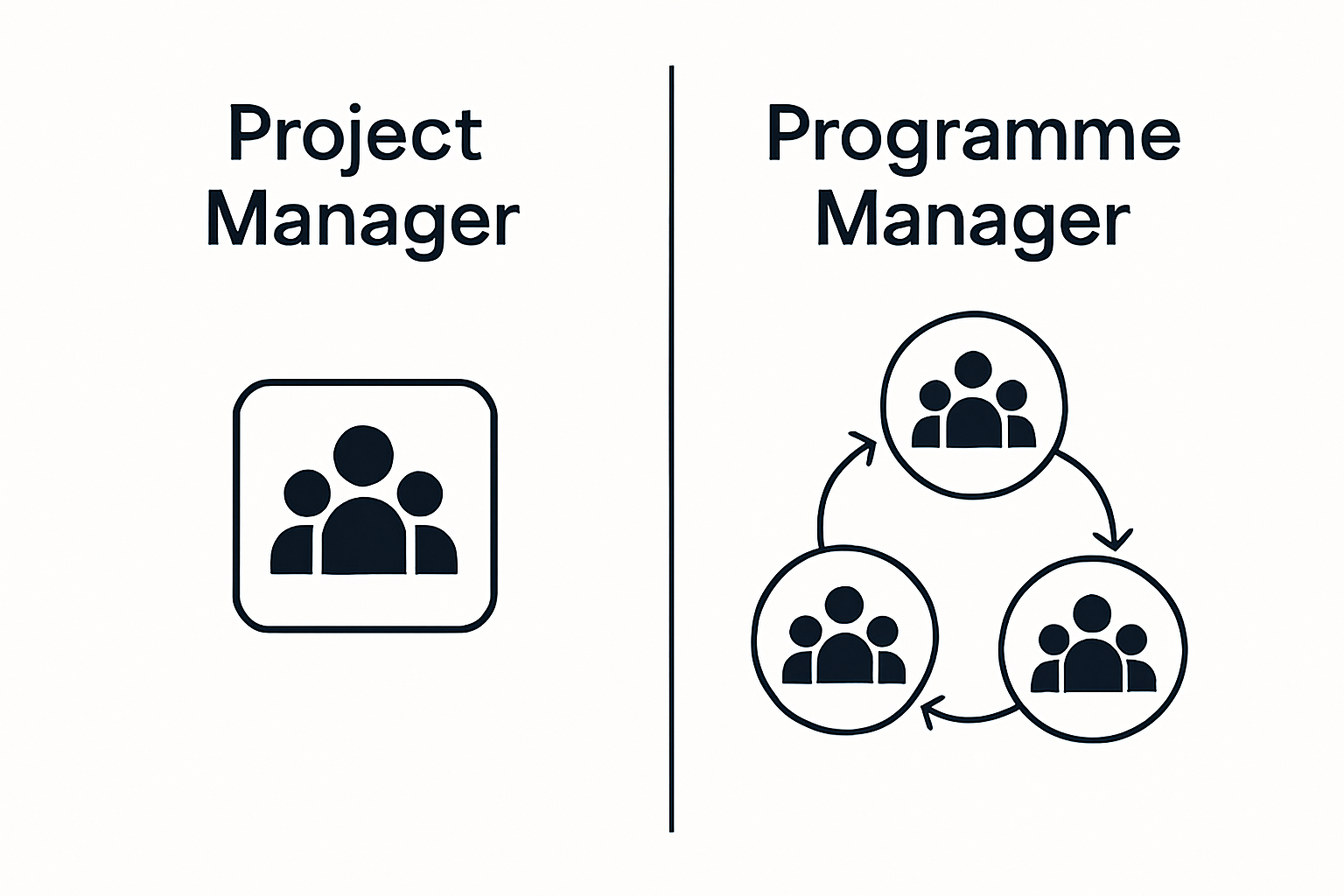
A programme manager is a strategic professional responsible for overseeing complex, interconnected projects that collectively drive organizational goals. Unlike project managers who focus on individual initiatives, programme managers take a broader, more holistic approach to delivering comprehensive business outcomes.
Defining the Programme Management Role
Programme managers operate at a higher strategic level, coordinating multiple related projects to ensure they work together seamlessly. According to the National Academies of Sciences, Engineering, and Medicine, their primary objective is aligning project portfolios with an organization’s overarching strategic objectives.
Key responsibilities of a programme manager include:
- Developing comprehensive strategies that connect individual project goals
- Managing complex interdependencies between different project teams
- Monitoring resource allocation across multiple initiatives
- Mitigating risks that could impact overall program success
- Communicating program progress to senior leadership
Strategic Coordination and Leadership
The programme manager serves as a critical bridge between tactical project execution and strategic organizational vision.
Their role demands exceptional leadership skills, enabling them to:
- Synthesize diverse project outputs into cohesive program results
- Align project teams toward shared objectives
- Make data-driven decisions that optimize overall program performance
- Navigate complex organizational dynamics
The U.S. Office of Personnel Management emphasizes that programme managers must possess robust analytical capabilities to evaluate program effectiveness continuously.
Successful programme managers combine technical expertise, strategic thinking, and exceptional interpersonal skills to transform complex project landscapes into streamlined, goal-oriented initiatives that drive organizational success.
Why Programme Managers are Essential in Project Management
In the complex world of modern organizational strategy, programme managers play a critical role in transforming strategic vision into actionable results. They are the linchpins that connect individual project efforts with overarching business objectives, ensuring comprehensive and coordinated execution.
Bridging Strategic Vision and Operational Execution
According to the Project Management Institute, programme management focuses on project interdependencies and helps determine the optimal approach for managing and realizing desired benefits. This means programme managers do more than manage projects they create strategic alignment across multiple initiatives.
Key reasons programme managers are indispensable include:
- Providing holistic oversight of interconnected projects
- Ensuring consistent alignment with organizational goals
- Mitigating risks across complex project portfolios
- Optimizing resource allocation and efficiency
- Translating high-level strategic objectives into actionable plans
Creating Organizational Coherence
Programme managers serve as crucial translators between executive strategy and operational implementation. The National Institutes of Health emphasizes that these professionals design, implement, and manage ongoing programs by directing related resources, personnel, and activities.
Their unique value proposition includes:
- Synthesizing diverse project outputs into cohesive organizational outcomes
- Coaching teams through complex interdependencies
- Making data-driven decisions that balance multiple project requirements
- Maintaining flexibility while preserving strategic integrity
By integrating technical expertise with strategic thinking, programme managers transform potential organizational chaos into streamlined, goal-oriented initiatives that drive meaningful business progress.
How Programme Managers Coordinate Multiple Projects Effectively
Coordinating multiple projects simultaneously requires exceptional organizational skills, strategic thinking, and a comprehensive approach to management. Programme managers must navigate complex interdependencies while maintaining focus on overarching organizational objectives.
Strategic Project Interconnection
According to the Strategic Programme and Portfolio Management research, effectively coordinating multiple projects demands a holistic view that goes beyond traditional project management techniques. Programme managers create intricate frameworks that allow different projects to communicate, align, and support each other.
Key strategies for effective project coordination include:
- Developing comprehensive communication protocols
- Creating centralized tracking and reporting mechanisms
- Establishing clear interdependency mapping
- Implementing standardized project management methodologies
- Maintaining flexible yet structured governance models
Resource Optimization and Risk Management
Programme managers must balance resource allocation across multiple initiatives while simultaneously identifying and mitigating potential risks. They act as strategic conductors, ensuring that each project contributes to the broader organizational symphony without overwhelming available resources.
Critical coordination techniques involve:
- Prioritizing projects based on strategic importance
- Dynamically redistributing resources as project needs evolve
- Creating robust risk assessment and mitigation strategies
- Developing comprehensive contingency plans
- Maintaining transparent performance metrics
By integrating advanced technological tools, sophisticated communication strategies, and data-driven decision-making, programme managers transform complex project landscapes into streamlined, goal-oriented initiatives that drive organizational success.

Key Skills and Competencies of Successful Programme Managers
Successful programme managers are multifaceted professionals who blend strategic thinking, technical expertise, and exceptional interpersonal skills. Their ability to navigate complex organizational landscapes requires a sophisticated combination of competencies that extend far beyond traditional management approaches.
Strategic Leadership and Communication
According to the National Institutes of Health, programme managers must provide creative solutions to program planning and problem-solving while directing comprehensive analysis and evaluation efforts. This demands a unique blend of leadership capabilities that transcend conventional management techniques.
Core strategic leadership skills include:
- Developing comprehensive organizational vision
- Translating high-level objectives into actionable strategies
- Creating collaborative team environments
- Communicating complex ideas with clarity and precision
- Inspiring and motivating cross-functional teams
Technical and Analytical Competencies
Programme managers must possess robust technical skills that enable them to understand complex project dynamics and make data-driven decisions. Their analytical capabilities allow them to assess risks, optimize resources, and maintain strategic alignment across multiple initiatives.
Critical technical competencies encompass:
- Advanced project management methodologies
- Financial planning and budgeting expertise
- Risk assessment and mitigation strategies
- Performance metrics analysis
- Technological tool proficiency
By integrating strategic leadership with technical proficiency, programme managers transform organizational complexity into streamlined, goal-oriented initiatives that drive meaningful business progress.
Here is a summary table of core skills and competencies required for successful programme managers, illustrating the blend of strategic and technical abilities highlighted in the article.
| Skill Category | Description |
|---|---|
| Strategic Leadership | Developing vision, aligning teams, inspiring collaboration |
| Communication | Conveying complex ideas clearly, facilitating stakeholder engagement |
| Analytical Skills | Evaluating program effectiveness, data-driven decision-making |
| Technical Proficiency | Mastery of project management tools, financial planning, risk analysis |
| Problem-Solving | Creating innovative solutions, managing complex interdependencies |
Take Charge of Program Management Challenges with BreezyTips
Struggling to juggle multiple projects and achieve seamless coordination, just like a seasoned programme manager? The article “Understanding the Role of a Programme Manager” highlights the stress of aligning project teams, managing complex interdependencies, and turning high-level strategies into real results. If you want to master organization, optimize resources, or even just improve your daily workflows, you are not alone. The chaos of handling several priorities at once can be overwhelming and leave you searching for practical solutions.
Turn complexity into clarity by exploring BreezyTips.com. Our guides offer simple tips for streamlining productivity, tackling tech glitches, and creating efficient processes in any area of life. Gain actionable advice tailored for busy minds and ambitious goals. Visit our homepage now to unlock the power of smart, everyday solutions that help you stay ahead. Your next breakthrough is just one tip away.
Frequently Asked Questions
What is the primary role of a programme manager?
The primary role of a programme manager is to oversee multiple interconnected projects, ensuring they align with the organization’s strategic objectives and deliver comprehensive business outcomes.
What skills are essential for a successful programme manager?
Successful programme managers need strategic leadership, excellent communication, robust analytical capabilities, and technical expertise in project management methodologies and risk assessment.
How does a programme manager differ from a project manager?
A programme manager focuses on coordinating multiple related projects to achieve broader organizational goals, while a project manager typically manages individual projects with specific deliverables and timelines.
To help clarify the differences between a programme manager and a project manager, this comparison table summarizes their respective focus areas and responsibilities.
| Role | Main Focus | Scope | Primary Responsibilities | Outcome Emphasis |
|---|---|---|---|---|
| Programme Manager | Coordinating multiple related projects | Broad (multiple projects) | Strategic alignment, resource management, risk mitigation | Unified organizational goals |
| Project Manager | Managing a single project | Narrow (one project) | Delivering on-time, on-budget project deliverables | Successful project completion |
What strategies do programme managers use to coordinate multiple projects?
Programme managers use comprehensive communication protocols, centralized tracking systems, clear interdependency mapping, and standardized project management methodologies to ensure the successful coordination of multiple projects.