Skip to content
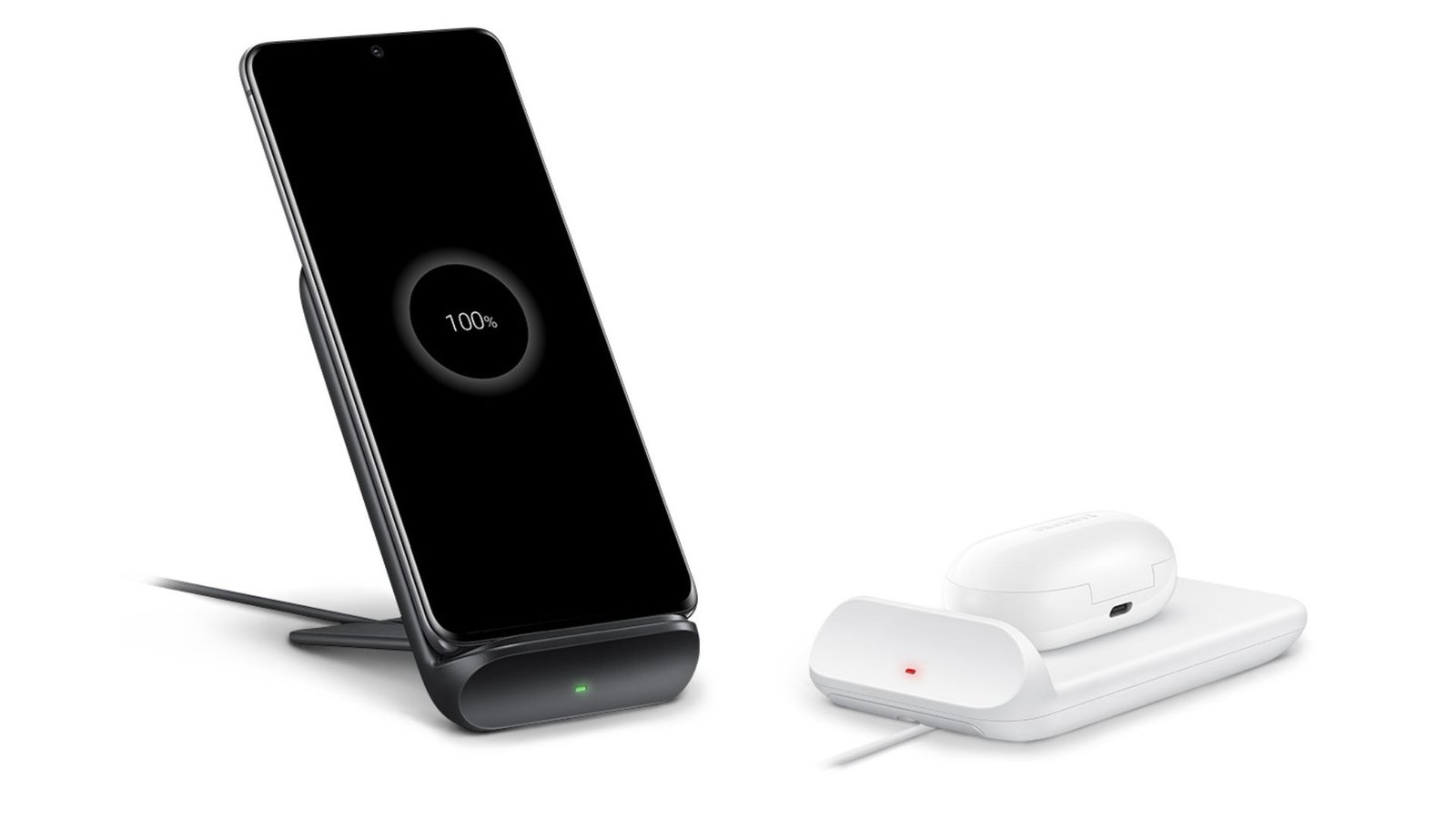
The quiet revolution is complete. Tangled cables, frayed connectors, and the endless search for the right charging port are rapidly becoming relics of a bygone era, thanks to the widespread adoption of Wireless Charging. Once a futuristic novelty, Wireless Charging is now integrated into our smartphones, earbuds, smartwatches, and even furniture. This technology represents more than just convenience; it’s a fundamental shift in how we power our lives.
But beneath the sleek, minimalist surface of a charging pad lie complex physics, evolving standards, and critical questions about energy efficiency and safety. As Wireless Charging moves beyond the bedside table into electric vehicles, medical devices, and entire smart cities, understanding its core principles, limitations, and potential is essential. This deep dive will explain how this remarkable technology works, address common concerns, and explore the future of cable-free power delivery.
The Fundamentals of Wireless Charging: How it Works
At its heart, Wireless Charging relies on a principle discovered by Michael Faraday in the 1830s: electromagnetic induction. This elegant concept allows electricity to jump a small air gap between two coils of wire without a physical connection.
1. Inductive Charging (The Qi Standard)
The most common form of Wireless Charging today, particularly for consumer electronics, is inductive charging, standardized largely by the Wireless Power Consortium (WPC) under the Qi (pronounced “chee”) standard.
- The Transmitter: This is the charging pad, which is plugged into a wall outlet. Inside the pad is a primary coil (transmitter coil). When the pad is active, it sends an alternating current (AC) through this coil.
- The Magnetic Field: The changing electric current generates a fluctuating magnetic field that extends a few millimeters (up to about 20mm) into the space directly above the pad.
- The Receiver: Your smartphone, earbuds, or smartwatch contains a secondary coil (receiver coil) embedded in its back.
- The Power Transfer: When the receiver coil comes into close proximity with the magnetic field generated by the transmitter coil, the magnetic field induces an electrical current in the receiver coil (Faraday’s Law of Induction). This induced AC current is then converted into direct current (DC) by a rectifier and used to charge the device’s battery.
2. Resonant and RF Wireless Charging
While inductive charging requires close proximity and precise alignment, newer forms of Wireless Charging are extending the distance and flexibility:
- Magnetic Resonance Charging: This technique uses two coils tuned to resonate at the same frequency, much like a pair of tuning forks. This allows power transfer over greater distances (up to 50mm) and provides more spatial freedom, meaning the device doesn’t need to be perfectly centered.
- Radio Frequency (RF) Charging: This is the longest-range method, using radio waves to transmit low power over meters. It’s often used for very small devices, such as IoT sensors or medical devices, that require minimal power but need true spatial freedom. The future of pervasive Wireless Charging infrastructure relies heavily on advancements in resonant and RF power transmission.
Deconstructing Efficiency: The Trade-Off of Convenience
One of the most persistent concerns regarding Wireless Charging is its energy efficiency compared to traditional wired charging. While cables can achieve charging efficiency of 90% or more, Wireless Charging typically operates in the range of 70% to 85%.
The Efficiency Gap and Heat Loss
The difference in efficiency stems primarily from the energy lost during the wireless transfer process.
- Alignment Loss: In inductive charging, if the transmitter and receiver coils are not perfectly aligned, the coupling between the two magnetic fields weakens, and more energy dissipates as wasted heat.
- Conversion Loss: Energy is lost during the two main conversion steps: converting the wall socket’s AC power to the transmitter’s high-frequency AC, and converting the received AC power back to DC power inside the device’s battery.
- Standby Power: Older or non-certified Wireless Charging pads may continue to draw a small amount of “phantom” power even when no device is on them, contributing to overall energy waste.
The Rise of Qi2 and Efficiency Improvements
The introduction of the Qi2 standard by the WPC has directly addressed the alignment problem. By incorporating the Magnetic Power Profile (MPP)—based on Apple’s MagSafe technology—Qi2 chargers use magnets to ensure perfect coil alignment every time. This magnetic guidance dramatically reduces energy loss and heat generation, pushing charging efficiency closer to 90% and enabling faster charging speeds (up to 15 W initially, with plans for 25 W and higher). This technological leap is crucial for wide-scale adoption. Wireless Charging for multiple devices, which is also becoming popular, relies on these efficiency gains to prevent excessive heat buildup.
While the raw energy transfer efficiency might be lower than a cable, the convenience factor is a powerful counterpoint. The ease of simply dropping a device onto a pad encourages more frequent, shorter charging sessions (known as “grazing”), which can ultimately lead to a device that is more consistently topped up. Ultimately, the question is often not about absolute efficiency, but about the balance between energy use and the enhanced user experience, a growing trend in consumer electronics discussed extensively in major tech publications like Wired Explore Wired’s Technology Analysis.
The Crucial Role of Safety and Standards
Safety is non-negotiable for any power delivery system, and Wireless Charging systems must adhere to strict international standards to mitigate the risks associated with electromagnetic fields (EMF) and heat generation.
International Safety Certifications
- Qi Certification: The WPC ensures that all certified devices and chargers include robust safety features. The certification process verifies compliance with regulations regarding electromagnetic interference (EMI) and power transfer limits. Using only Qi-certified products is the best defense against poor performance and safety risks.
- ICNIRP Guidelines: The levels of EMF emitted by Wireless Charging devices are generally low and fall well within the internationally recognized guidelines set by organizations like the International Commission on Non-Ionizing Radiation Protection (ICNIRP).
- Built-in Thermal Management: Certified chargers and devices include temperature control systems. If a device becomes too hot—often due to poor alignment or a foreign object—the charger will automatically reduce the power or shut down completely to prevent damage to the battery and the device.
Foreign Object Detection (FOD)
Perhaps the single most important safety feature in modern Wireless Charging is Foreign Object Detection (FOD). This mechanism is designed to prevent a potential fire hazard.
The transmitter coil generates a magnetic field. If a metallic foreign object, such as a coin, key, or credit card, is placed between the charger and the device, the magnetic field can induce a current in that object, causing it to heat up rapidly. FOD technology continuously monitors the power transfer. If the system detects a mismatch between the power sent and the power received (a sign that a foreign object is absorbing the energy), it immediately halts the Wireless Charging process. This mechanism is critical for the safety and reliability of Wireless Charging pads in public and home environments.
For information on protecting your electronic devices and data, check out our resource on breezytips.
The Future is Wire-Free: Long-Distance and High-Power Wireless Charging
The current generation of Wireless Charging is just the beginning. The industry is rapidly advancing toward a future defined by ubiquitous, high-power, and long-range power transfer that will fundamentally change how we interact with all our technology.
1. Wireless Electric Vehicle Charging (WEVC)
The highest-power application of future Wireless Charging lies in the electric vehicle (EV) market. Standards bodies like SAE International are actively developing protocols like SAE J2954 for high-power, resonant Wireless Charging that can deliver power at levels up to 22 kW or more.
- Static Charging: EVs will charge simply by parking over a pad embedded in a garage floor or public parking spot. This eliminates the need for bulky cables and is far more convenient, increasing the likelihood of daily charging and boosting battery longevity.
- Dynamic Charging: The most revolutionary development involves charging vehicles while they are moving. Pilot projects are testing in-road coils that automatically transfer power to compatible EVs driving over them. This breakthrough would effectively eliminate range anxiety and allow smaller, lighter car batteries, potentially transforming transportation infrastructure globally.
2. Multi-Device and Spatial Freedom
Future advancements will expand the charging zone significantly. Wireless Charging technology will move from dedicated pads to entire surfaces—desktops, kitchen counters, and vehicle consoles—that can charge multiple devices simultaneously, regardless of their precise placement. This shift towards magnetic resonance and radio frequency charging will realize the concept of ambient power, where devices charge simply by being in a specific area.
3. Medical and Industrial Applications
Beyond consumer tech, Wireless Charging is solving critical problems in the medical and industrial sectors.
- Medical Implants: Wireless power eliminates the need for wires penetrating the skin to power pacemakers or other medical devices, significantly reducing the risk of infection.
- Robotics and IoT: Automated Guided Vehicles (AGVs) in factories and remote Internet of Things (IoT) sensors can be charged automatically without human intervention, leading to greater operational efficiency and less downtime. The market for industrial Wireless Charging systems is set for explosive growth as factory automation becomes the norm. The ongoing standardization efforts by groups like the AirFuel Alliance are paving the way for a universally compatible future, a topic frequently detailed in engineering reports and technology journals like Ars Technica Read Ars Technica’s Deep Dives on Tech.
Conclusion: The Unplugged Future is Now
Wireless Charging has come a long way from its early, slow, and often finicky implementation. Today’s technology, governed by robust standards like Qi2, offers high-speed power transfer, improved efficiency, and sophisticated safety features like Foreign Object Detection. The trade-off between convenience and raw efficiency is rapidly diminishing, making cable-free power an increasingly compelling choice for consumers.
As research continues to push the boundaries of magnetic resonance and radio wave technologies, the vision of a truly “unplugged” world is fast approaching. From powering your phone on your desk to charging an EV at 70 mph on a dedicated smart road, Wireless Charging is the critical infrastructure component that will enable the next wave of technological innovation, confirming its indispensable role in the modern world.