Skip to content
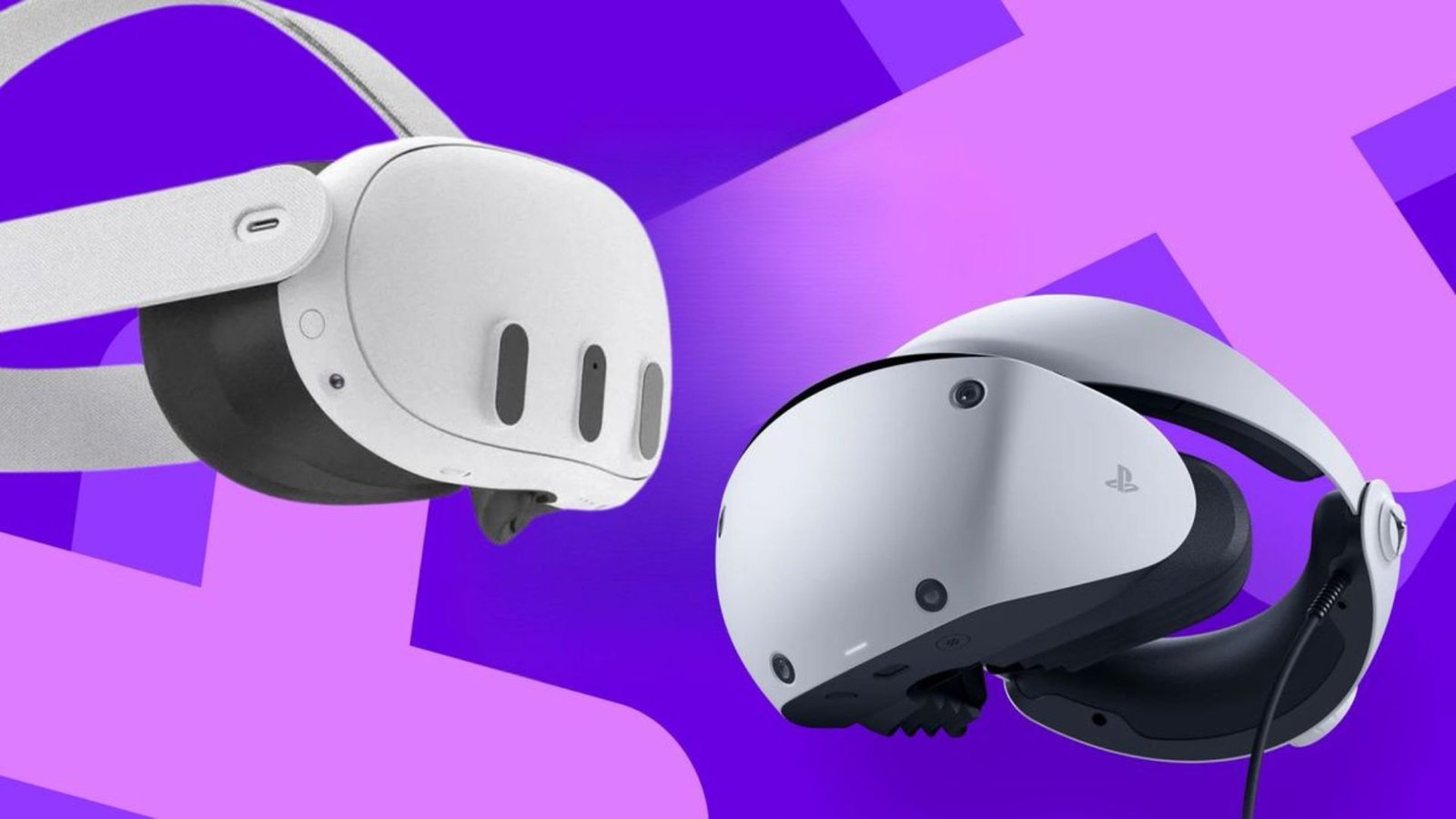
The world of virtual reality is exploding. What was once a niche hobby for tech enthusiasts has blossomed into a mainstream entertainment platform, offering immersive experiences that were the stuff of science fiction just a decade ago. At the forefront of this revolution are two powerful contenders vying for the top spot in the consumer market: Meta’s Quest 3 and Sony’s PlayStation VR2. Choosing the right Virtual Reality Headset can be a daunting task, as both offer incredible, yet fundamentally different, approaches to immersion.
This in-depth comparison will break down everything you need to know about the Meta Quest 3 and the PlayStation VR2. We’ll dive into their core philosophies, compare their technical specifications, explore their game libraries, and ultimately help you decide which Virtual Reality Headset deserves a place in your home.
Table of Contents
The Core Difference: Freedom vs. Raw Power
Before we get into the nitty-gritty of screen resolution and controller haptics, it’s crucial to understand the most significant distinction between these two devices. Your choice will likely hinge on which of these two philosophies aligns best with your lifestyle and gaming setup.
Meta Quest 3: The All-in-One, Go-Anywhere VR System
The Meta Quest 3 is a standalone Virtual Reality Headset. This is its defining feature. All the processing, storage, and power are built directly into the headset itself. There are no wires tethering you to a console or a PC. You can put it on in your living room, take it to a friend’s house, or even use it in your backyard (weather permitting). This untethered freedom offers an unparalleled level of convenience and accessibility, making it incredibly easy to jump into a VR experience anytime, anywhere.
PlayStation VR2: The Console-Powered Powerhouse
The PlayStation VR2, in contrast, is a tethered Virtual Reality Headset. It is an accessory designed exclusively for the PlayStation 5 console. It connects to the PS5 via a single USB-C cable and uses the console’s formidable processing power to render breathtakingly detailed and complex virtual worlds. This approach sacrifices the freedom of a standalone device for a massive leap in graphical fidelity, allowing for games that look and feel closer to a high-end PC VR experience.
Head-to-Head: A Deep Dive Comparison
Let’s break down how these two leading VR systems stack up across the most important categories.
1. Display Technology and Visuals
The quality of the display is paramount in a Virtual Reality Headset, as it’s your window into the digital world.
- Meta Quest 3: Sports two LCD displays with a resolution of 2064 x 2208 pixels per eye. It utilizes “pancake lenses,” which are thinner and lighter than the older Fresnel lenses, allowing for a slimmer headset profile and improved edge-to-edge clarity. The visuals are sharp, bright, and represent a significant upgrade over its predecessor, the Quest 2.
- PlayStation VR2: Features two stunning 4K HDR OLED displays with a resolution of 2000 x 2040 pixels per eye. The inclusion of OLED is a game-changer. It delivers true, deep blacks and an incredibly vibrant color palette that LCDs can’t quite match. The HDR (High Dynamic Range) further enhances the contrast, making bright areas pop and dark scenes feel incredibly atmospheric. While the per-eye resolution is technically slightly lower than the Quest 3, the superior screen technology often results in a more visually impactful experience.
Winner: PlayStation VR2. The 4K HDR OLED displays provide a level of color, contrast, and immersion that is simply best-in-class for consumer VR.
2. Performance and Processing Power
This is where the tethered vs. standalone debate really comes into focus.
- Meta Quest 3: Powered by the Qualcomm Snapdragon XR2 Gen 2 chip. This is a custom-built processor designed specifically for VR and AR applications. It offers more than double the graphics performance of the Quest 2, enabling more detailed textures, smoother frame rates, and more complex game environments on a standalone device.
- PlayStation VR2: Leverages the full power of the PlayStation 5. The PS5’s custom AMD Zen 2 CPU and RDNA 2 GPU are orders of magnitude more powerful than any mobile chipset. This allows for graphics with higher polygon counts, advanced lighting effects like ray tracing, and massive, detailed worlds that simply aren’t possible on a standalone Virtual Reality Headset.
Winner: PlayStation VR2. There’s no contest here. The raw power of the PS5 console provides a graphical experience that is in a completely different league.
3. Controllers and Haptics
How you interact with the virtual world is just as important as how you see it.
- Meta Quest 3: The new Touch Plus controllers are a refinement of the previous generation. They are comfortable, intuitive, and feature excellent tracking. They’ve removed the outer tracking rings for a more compact design. The haptics are good, providing believable feedback for actions in the game.
- PlayStation VR2: The Sense controllers are a technological marvel. They incorporate the same advanced haptics and adaptive triggers found in the PS5’s DualSense controller. You can feel the tension of a bowstring, the resistance of a trigger, or the subtle texture of a surface. Furthermore, the Virtual Reality Headset itself contains haptic feedback, allowing you to feel rumbles and impacts directly.
Winner: PlayStation VR2. The combination of advanced haptics, adaptive triggers, and headset feedback creates a level of tactile immersion the Quest 3 can’t match.
4. Mixed Reality (MR) Capabilities
This is a category where the two headsets diverge dramatically.
- Meta Quest 3: Mixed Reality is the headline feature. With high-resolution, full-color passthrough cameras, the Quest 3 can seamlessly blend virtual objects with your real-world environment. You can play a virtual board game on your actual coffee table, have digital aliens burst through your living room wall, or pin a virtual screen to your wall while you do chores.
- PlayStation VR2: Has a basic grayscale passthrough view. It’s functional for seeing your surroundings to set up your play area or grab your controllers, but it is not designed for mixed reality experiences or games.
Winner: Meta Quest 3. It’s not even a competition. The Quest 3 is designed from the ground up to be a premier mixed reality device, opening up a whole new category of experiences.
5. Game Library and Content
A Virtual Reality Headset is only as good as the games and apps you can run on it.
- Meta Quest 3: Has access to the massive and mature Meta Quest Store, which contains thousands of games, apps, and experiences. It’s backward compatible with the entire Quest 2 library, so it has a huge head start. It can also be connected to a PC (via a Link cable or wirelessly with Air Link) to play high-end PC VR titles. Its library is vast and diverse.
- PlayStation VR2: Has a smaller, more curated library of games available on the PlayStation Store. However, its focus is on high-quality, high-fidelity exclusives that take full advantage of the PS5’s power and the Sense controllers’ features. Titles like Horizon Call of the Mountain and the VR mode for Gran Turismo 7 are system-sellers that you can’t play anywhere else.
Winner: Tie. This completely depends on your preference. Do you want the sheer volume and variety of the Quest Store, or the high-end, polished exclusives of PlayStation? For more ideas on building a great gaming space, check out our guide on creating the ultimate Budget Gaming PC.
6. Price and Total Cost of Ownership
For most people, this is the bottom line.
- Meta Quest 3: Launches at a starting price of $499 for the 128GB model. The price you see is the price you pay to get started, as everything you need is in the box.
- PlayStation VR2: Retails for $549. However, it requires a PlayStation 5 console to function, which costs an additional $499. Therefore, the total cost of entry for a new user is over $1,000.
Winner: Meta Quest 3. Its all-in-one nature makes it a far more affordable entry point into high-quality VR. If you’re looking for ways to afford new gadgets, our articles on breezytips can help.
The Verdict: Which Virtual Reality Headset Should You Buy?
As you can see, there is no single “best” Virtual Reality Headset. The ideal choice depends entirely on your situation and what you value most.
You should buy the PlayStation VR2 if:
- ✅ You already own a PlayStation 5.
- ✅ Your top priority is cutting-edge graphical fidelity and visual immersion.
- ✅ You are excited about playing high-budget, exclusive titles like Horizon and Gran Turismo.
- ✅ You primarily plan to play in a dedicated space near your console.
You should buy the Meta Quest 3 if:
- ✅ You value the freedom and convenience of a wireless, standalone device.
- ✅ You want access to the largest and most diverse library of VR games and apps.
- ✅ You are excited by the possibilities of mixed reality.
- ✅ You don’t own a PS5 and want a more affordable entry point into VR.
- ✅ You have a gaming PC and want the option to play PC VR titles wirelessly.
Ultimately, the competition between these two amazing devices is a huge win for consumers. The PlayStation VR2 is pushing the boundaries of what’s possible in high-fidelity, console-based VR, with many tech experts at sites like IGN praising its immersive features. Meanwhile, the Meta Quest 3 is perfecting the standalone Virtual Reality Headset formula and pioneering the future of mixed reality. Whichever you choose, you’re stepping into a new and exciting world of interactive entertainment.