Skip to content

Traveling internationally used to mean juggling SIM cards and worrying about sky-high roaming fees. Now travelers can simply scan a QR code and tap a few buttons for instant connection wherever they land. But here is what most people do not realize. Over 80 percent of new smartphones now support eSIMs, letting users store multiple network profiles at once. What surprises most is how much money and hassle this digital solution can save, while offering flexibility that traditional SIM cards just cannot match.
Table of Contents
- What Are Travel Esims And Why Use Them?
- Understanding The Advantages Of Esim Technology
- How Esims Work: A Simplified Breakdown
- Real-World Applications Of Travel Esims
- Key Considerations When Choosing An Esim Plan
Quick Summary
| Takeaway | Explanation |
|---|---|
| Travel eSIMs offer instant activation | Connect to local networks immediately when you arrive at your destination, enhancing your travel experience significantly. |
| Select eSIM plans tailored to your needs | Evaluate data volume, network coverage, and trip duration to choose the best eSIM plan for your travel requirements. |
| Avoid high roaming charges with eSIMs | Travel eSIMs provide cost-effective options that eliminate expensive international roaming fees, making it easier to manage expenses. |
| eSIM technology enhances device security | The embedded nature of eSIMs reduces the risk of theft and unauthorized access compared to traditional SIM cards. |
| Simplify mobile connectivity management | eSIMs allow users to store multiple network profiles, facilitating seamless transitions between different carriers with no physical swapping. |
What are Travel eSIMs and Why Use Them?
Travel eSIMs represent a revolutionary digital solution for mobile connectivity when traveling internationally. Unlike traditional physical SIM cards, an eSIM (embedded SIM) is a small chip permanently integrated directly into your smartphone, tablet, or other mobile device that allows you to connect to cellular networks without swapping out physical cards.
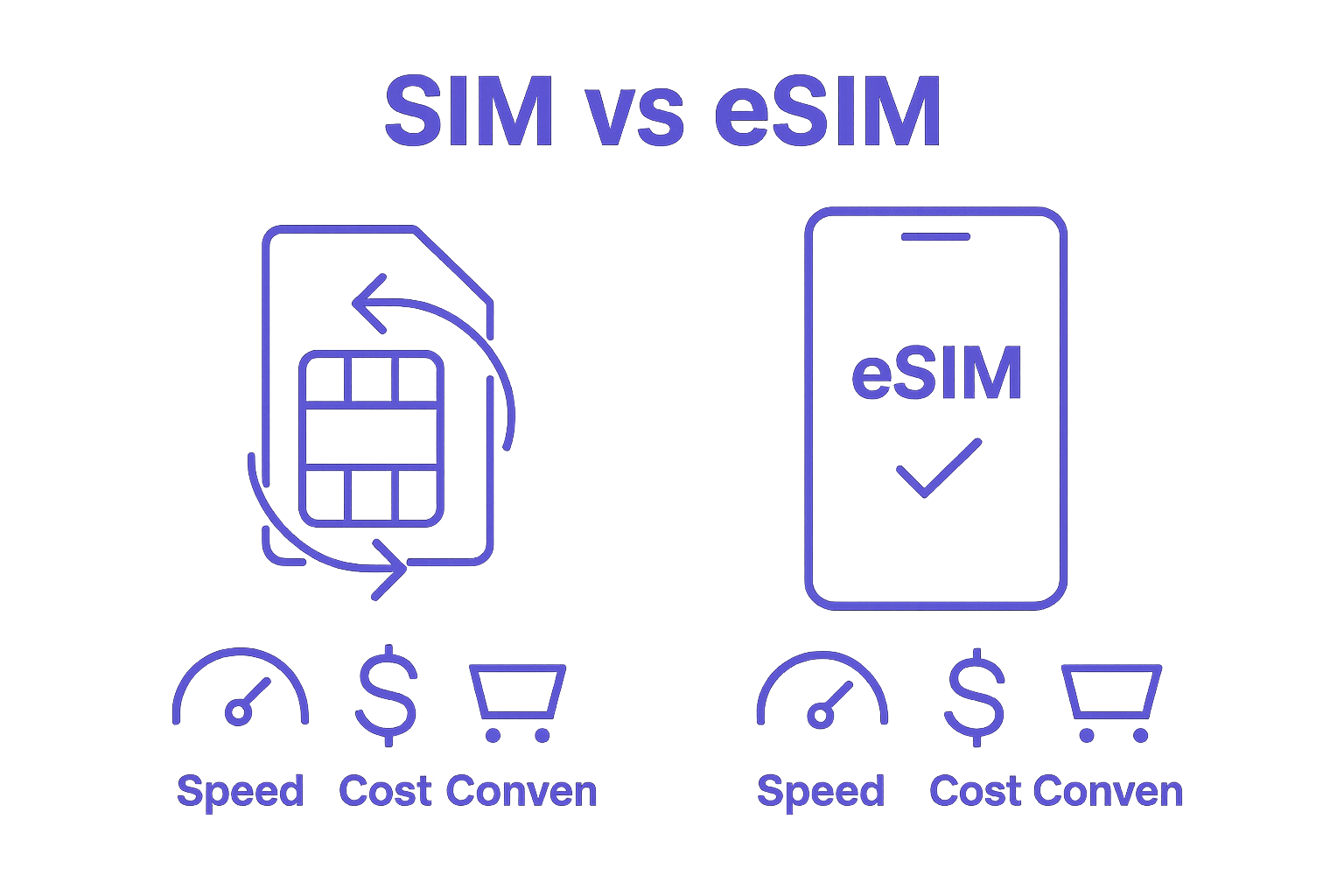
To clarify the key differences between traditional SIM cards and eSIM technology for travelers, the table below summarizes their main features and benefits.
| Feature | Traditional SIM Card | eSIM (Embedded SIM) |
|---|---|---|
| Physical Card Required | Yes | No |
| Activation Process | Manual swap and setup | Digital activation via QR code or profile |
| Network Switching | Swap physical cards to change networks | Switch profiles instantly on device |
| Multiple Profiles Supported | Usually one at a time | Multiple profiles stored/managed |
| Security | SIM can be lost or stolen | Embedded in device; reduced theft risk |
| Device Design Impact | Requires SIM tray/slot | Enables slimmer, more water-resistant devices |
| Cost When Traveling | High roaming fees possible | Local rate plans; lower travel costs |
Understanding eSIM Technology
An eSIM functions like a digital passport for mobile networks. Instead of physically inserting a removable SIM card, the eSIM is a programmable chip that can store multiple carrier profiles simultaneously. This means travelers can switch between different mobile networks and data plans with just a few taps on their device, without needing to purchase local physical SIM cards in each country.
The following table presents the typical steps involved in activating an eSIM for international travel, describing each stage in the digital network activation process.
| Step | Action Description |
|---|---|
| Plan Selection | Choose a compatible eSIM data plan for your destination |
| Purchase | Buy the plan online through a provider or app |
| QR Code/Link Delivery | Provider sends a QR code or download link for the eSIM profile |
| Profile Installation | Scan the QR code or download the profile directly onto your device |
| Automatic Setup | Device configures itself and securely registers with the mobile network |
| Network Ready | You are instantly connected and ready to use data and calls abroad |
Key advantages of travel eSIMs include:
- Instant Network Activation: Connect to local networks immediately upon arrival
- Cost Efficiency: Avoid expensive international roaming charges
- Flexibility: Switch between carriers and plans without physical card replacement
How Travel eSIMs Work for International Travelers
When traveling abroad, travelers can purchase an eSIM data plan online before their trip. After purchasing, they simply scan a QR code or download a carrier profile directly to their device. According to the Federal Communications Commission, this digital approach eliminates the complexity of traditional SIM card management and provides enhanced security since the SIM cannot be physically removed from the device.
Modern smartphones from Apple, Google, and Samsung now support eSIM technology, making international connectivity easier and more streamlined than ever before. Travelers can select data packages specific to their destination, duration of stay, and data requirements, providing unprecedented control over mobile expenses and connectivity.
Understanding the Advantages of eSIM Technology
eSIM technology represents a significant leap forward in mobile connectivity, offering numerous advantages that traditional physical SIM cards cannot match. By transforming how devices connect to cellular networks, eSIMs are revolutionizing the telecommunications landscape for consumers and businesses alike.
Enhanced Flexibility and Connectivity
One of the most compelling benefits of eSIM technology is its unprecedented flexibility. Unlike traditional SIM cards that require physical swapping, eSIMs allow users to switch carriers and data plans instantly through digital profiles. This means travelers can select and activate local network plans directly from their device without visiting a local store or purchasing a physical SIM card.
Key advantages of eSIM technology include:
- Simplified Device Management: Store multiple network profiles simultaneously
- Global Accessibility: Seamlessly connect across international networks
- Reduced Hardware Complexity: Eliminate physical SIM card slots
Security and Technological Innovation
eSIM technology introduces significant security improvements over traditional SIM cards. According to the Federal Communications Commission, embedded SIMs cannot be physically removed, dramatically reducing the risk of SIM card theft and unauthorized network access. This integrated approach provides a more secure connection method for mobile devices.
Moreover, eSIMs enable more sophisticated device designs. Manufacturers can create slimmer, more water-resistant devices by eliminating physical SIM card trays. This technological advancement supports the ongoing trend of creating more compact and resilient mobile devices that meet modern users’ demanding performance requirements.
The future of mobile connectivity is digital, and eSIM technology is at the forefront of this transformation. As smartphone manufacturers and telecom providers continue to adopt this technology, users can expect even more innovative features and seamless connectivity experiences.
How eSIMs Work: A Simplified Breakdown
eSIM technology represents a sophisticated digital approach to mobile network connectivity, operating through a complex yet user-friendly mechanism that eliminates traditional physical SIM card limitations. Unlike conventional SIM cards, eSIMs are integrated microchips embedded directly within mobile devices, enabling seamless digital network management.
The Digital Network Activation Process
The core functionality of eSIM technology revolves around digital profile management. When a user wants to connect to a new network, they download a carrier profile directly to their device. This digital profile contains all necessary network authentication credentials, allowing instant network registration without physical intervention.
Key steps in the eSIM activation process include:
- Profile Selection: Choose a compatible mobile network provider
- QR Code Scanning: Capture carrier-provided digital configuration
- Automatic Configuration: Device automatically registers with selected network
Technical Mechanics of Remote SIM Provisioning
Remote SIM Provisioning (RSP) is the underlying technology that enables eSIM functionality. According to the Federal Communications Commission, this technology allows users to switch carriers and manage network profiles remotely through secure digital channels. The RSP system uses encrypted communication protocols to ensure safe transmission of network credentials and user authentication information.
The technical architecture involves multiple secure elements working simultaneously. When a user selects a new network profile, the device communicates with the carrier’s backend systems, downloads an encrypted network configuration, and seamlessly switches network connections without requiring physical intervention.
This digital approach provides unprecedented flexibility, allowing travelers to manage their mobile connectivity with unprecedented ease and speed. As mobile technology continues evolving, eSIM technology represents a significant leap toward more intelligent, flexible, and user-centric network connectivity solutions.
Real-World Applications of Travel eSIMs
Travel eSIMs have transformed how modern travelers manage mobile connectivity, offering practical solutions across various travel scenarios. From business trips to leisure vacations, these digital SIM technologies provide seamless, flexible communication options that traditional mobile plans cannot match.
Travel Scenarios and Connectivity Solutions
Travelers encounter numerous connectivity challenges when moving across international borders. eSIM technology addresses these issues by providing instant, cost-effective network access without the complexities of purchasing local SIM cards or incurring expensive roaming charges.
Key travel scenarios where eSIMs excel include:
- Business Travel: Maintain professional communication across multiple countries
- Backpacking Adventures: Connect affordably in remote destinations
- Short-Term International Trips: Activate temporary data plans instantly
Cost-Effective International Communication
One of the most significant advantages of travel eSIMs is their ability to dramatically reduce communication expenses. Instead of paying exorbitant international roaming fees, travelers can purchase localized data packages specific to their destination. Prepaid eSIM plans allow users to control their spending and avoid unexpected mobile bills.
According to the Federal Communications Commission, eSIM technology enables travelers to switch between carriers and data plans with unprecedented ease. This flexibility means users can select the most cost-effective option for their specific travel needs, whether it’s a short weekend trip or an extended international journey.

The practical applications extend beyond individual travelers. International students, remote workers, and frequent business travelers can now maintain consistent connectivity without the logistical challenges of traditional mobile plans. eSIM technology represents a significant leap forward in creating a more connected, accessible global communication ecosystem.
Key Considerations When Choosing an eSIM Plan
Selecting the right eSIM plan requires careful evaluation of multiple factors to ensure optimal mobile connectivity during international travel. Travelers must navigate a complex landscape of data packages, network coverage, and pricing structures to find the most suitable solution for their specific needs.
Assessing Data Requirements and Coverage
Before selecting an eSIM plan, travelers must conduct a comprehensive assessment of their data consumption patterns and destination-specific network requirements. Understanding your typical data usage is crucial for avoiding unnecessary expenses and ensuring consistent connectivity.
Key factors to evaluate include:
- Data Volume: Estimate your expected data consumption
- Network Coverage: Check provider’s international network strength
- Duration of Stay: Select plans matching trip length
Comparing Cost and Flexibility
Cost-effectiveness remains a primary consideration when choosing an eSIM plan. Travelers should compare pricing structures, looking beyond headline rates to understand potential hidden fees, data throttling policies, and rollover options. Some providers offer more flexible plans that allow partial data rollover or prorated refunds for unused data.
According to the Federal Communications Commission, consumers should carefully review the terms of service, paying special attention to:
- Exact coverage areas
- Data speed limitations
- Automatic renewal policies
- Cancellation procedures
Compatibility and Technical Requirements
Technical compatibility represents another critical factor in eSIM plan selection. Not all devices support eSIM technology, and even among compatible devices, network support can vary significantly. Travelers must verify their smartphone’s eSIM capabilities, ensuring it supports the specific frequency bands and network technologies used by their chosen provider.
By meticulously evaluating these considerations, travelers can select an eSIM plan that provides reliable, cost-effective mobile connectivity tailored to their unique travel requirements.
Take Charge of Your Global Connectivity With Confidence
Switching to travel eSIMs means leaving behind the stress of high roaming fees and confusing SIM card swaps. If you have ever landed in a new country and struggled to connect your device instantly, you know the frustration of traditional SIM cards. This guide introduces you to the smartest solution for international mobile access. No more searching for a local SIM card kiosk or worrying about technical compatibility. Now, you can stay connected anywhere with digital convenience and full control over your data spending.
If you are ready to simplify your tech life beyond travel, our blog at BreezyTips.com is packed with practical advice for tackling common mobile problems and overcoming digital hassles. Looking for more time-saving travel hacks or help with your device setup? Explore our collection of clear, step-by-step tips right here. Discover how easy it is to improve your daily routine. Visit BreezyTips.com now and take the first step towards worry-free travel and smarter living.
Frequently Asked Questions
What is a travel eSIM?
A travel eSIM is a digital solution for mobile connectivity that allows users to connect to cellular networks without the need for physical SIM cards. It is embedded directly into compatible devices and can store multiple carrier profiles for easy switching between networks.
How do I activate a travel eSIM?
To activate a travel eSIM, you typically purchase a data plan online, then download the carrier profile to your device by scanning a QR code or following your provider’s instructions. The process is quick and does not require physical SIM card swaps.
What are the benefits of using an eSIM over a traditional SIM card when traveling?
The benefits of using an eSIM include instant network activation upon arrival, cost efficiency with cheaper data plans, and the flexibility to switch carriers easily without needing to purchase physical SIM cards for each destination.
Are there devices that do not support eSIM technology?
Yes, not all devices support eSIM technology. It’s essential to check your device’s specifications to ensure it is compatible with eSIM capabilities, particularly in terms of the required frequency bands and network technologies.
Recommended
- What is a Tourist SIM Card? Understanding Your Travel Connectivity | SimCornerUSA