Skip to content
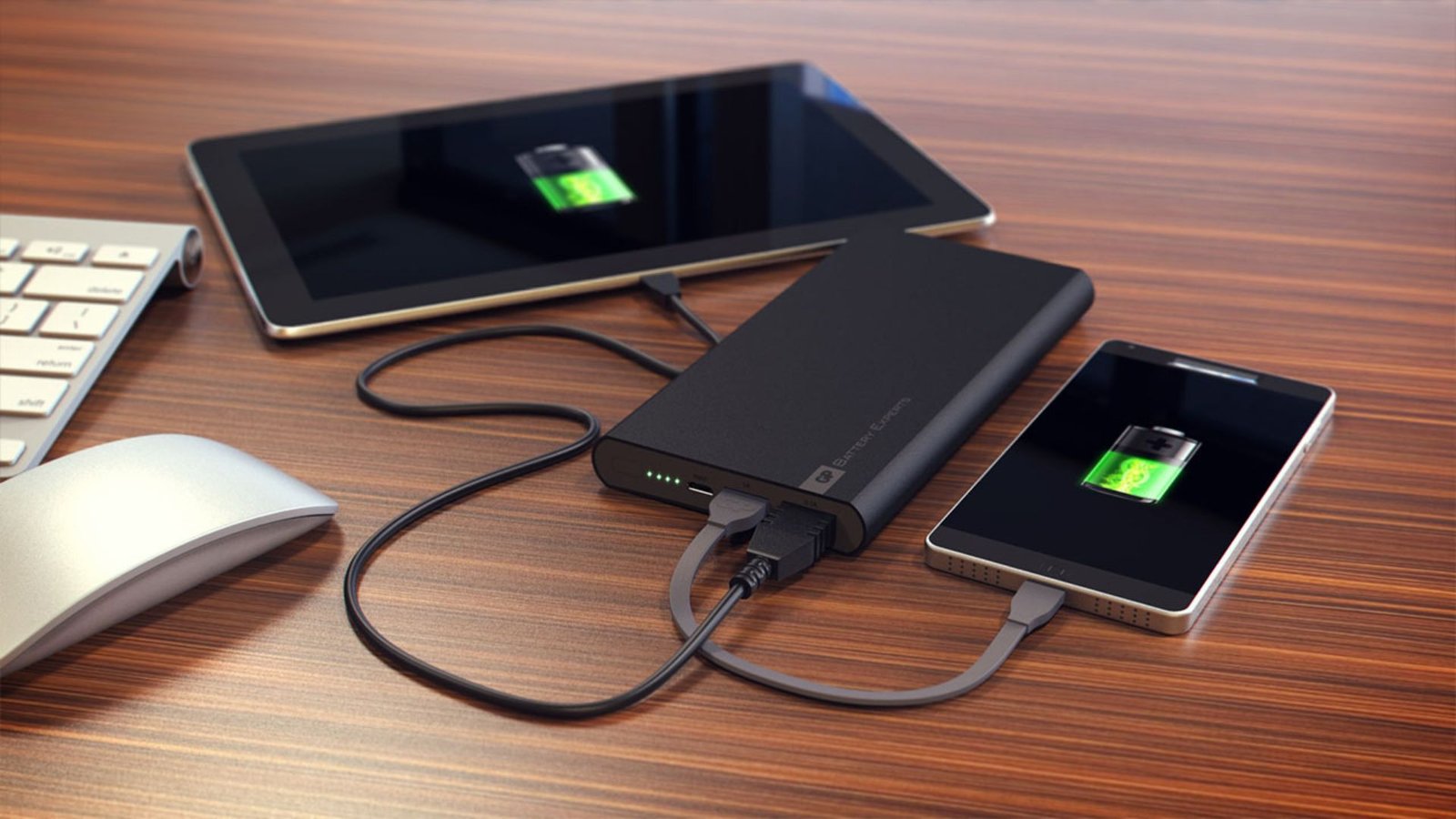
The modern traveler is defined by their tech. From navigating with GPS and capturing memories on a smartphone to working remotely on a laptop, being disconnected is simply not an option. That’s why the Power Bank has moved from a luxury accessory to an absolute travel essential. It is the mobile lifeline that keeps your digital world running when outlets are nowhere to be found—be it on a long-haul flight, a remote hiking trail, or a busy city sightseeing tour.
However, purchasing a Power Bank can be confusing. The market is saturated with options ranging from pocket-sized lipsticks to briefcase-sized portable power stations. The key metric you’ll see plastered across every box is capacity, measured in milliamp-hours (mAh). But how many mAh do you actually need? And how do you ensure the device you buy is safe and legal for air travel? This in-depth guide will demystify the science of portable power, help you calculate your travel needs, and ensure you select the perfect Power Bank for any adventure.
Table of Contents
Understanding the Core Metric: mAh vs. Wh
When shopping for a Power Bank, you’ll primarily see capacity advertised in milliamp-hours (mAh). This is a measure of electric charge, essentially telling you how long the battery can supply a certain amount of current. While it’s a helpful comparative figure, it doesn’t tell the complete story of the total energy stored, which is crucial for international travel and powering different devices.
The true measure of a battery’s total energy capacity is the Watt-hour (Wh). Watt-hours account for both the charge (mAh) and the battery’s voltage (V). This metric is critically important because airline regulations are based on Watt-hours (Wh), not mAh.
Understanding this conversion is your first step to being a smart traveler. It’s important for both calculating your actual charges and ensuring compliance with strict air travel safety laws. You can find more comprehensive technical breakdowns of battery efficiency and performance on resources like BreezyTips Tech Guides.
✈️ The Air Travel Safety Constraint
For most international travelers, the maximum allowable capacity on an airplane without special approval is the single most important factor. Airlines and regulatory bodies like the FAA and IATA enforce strict limits on lithium-ion batteries due to fire risks.
The Power Bank Air Travel Limits:
- Standard Limit (No Approval Required): Power banks with a capacity up to 100Wh are universally permitted in carry-on baggage (NEVER in checked luggage).
- Equivalent mAh: This is approximately 27,000 mAh (at 3.7V).
- Special Approval Required: Power banks between 100Wh and 160Wh may be allowed, but only with prior airline approval and must still be in carry-on luggage.
- Equivalent mAh: Approximately 27,000 mAh to 43,000 mAh.
- Forbidden: Power banks exceeding 160Wh are universally prohibited in passenger baggage.
Key Travel Tip: For hassle-free airport transit, the 20,000 mAh to 26,800 mAh Power Bank range is the “sweet spot.” A quality 26,800 mAh unit is designed to sit right under the 100Wh limit (often calculating to 99.16Wh), providing the absolute maximum amount of energy you can legally bring on a plane without filling out paperwork.
🎯 The Capacity Calculation Guide: Matching Capacity to Your Trip
Choosing the right capacity involves a simple calculation: tallying up the total energy you need and selecting a Power Bank that can provide that with some efficiency loss factored in. Always assume a real-world efficiency loss of about 15-20% due to heat, voltage conversion, and cable resistance.
Here is a practical breakdown based on different travel styles:
1. Minimalist Traveler (Day Trips or Weekend Getaways)
- Devices: Smartphone and wireless earbuds.
- Need: 1-2 full smartphone charges over 1-2 days.
- Recommended Capacity:5,000 mAh to 10,000 mAh
- Why: These Power Banks are ultra-portable, often pocket-sized, and lightweight. A 10,000 mAh unit provides roughly 2 full charges for a modern smartphone (which typically has a 4,000-5,000 mAh battery). It’s perfect for the person who spends their days sightseeing and has access to an outlet every night. For tips on keeping travel gear light, see: BreezyTips Travel Hacks.
2. Standard Traveler (Long Weekends or International Trips)
- Devices: Smartphone, Tablet, and/or a Camera.
- Need: 3-5 full smartphone charges, 1-2 tablet/camera charges, covering 2-4 days without an outlet.
- Recommended Capacity:15,000 mAh to 20,000 mAh
- Why: This is the Goldilocks zone. A 20,000 mAh Power Bank offers an excellent balance of capacity and portability, providing enough juice for an entire family’s devices for a weekend, or a solo traveler for several days. Crucially, a 20,000 mAh Power Bank (74Wh) is well within all airline limits.
3. Power User / Remote Worker / Extended Adventure (Multi-Day Off-Grid)
- Devices: Laptop (MacBook Pro/Air or Windows Ultrabook), Tablet, Smartphone, and Camera/Drone.
- Need: Full laptop charge, plus multiple recharges for all other devices. Needs to last 4+ days.
- Recommended Capacity:25,000 mAh to 27,000 mAh
- Why: This range is mandatory for charging a laptop, which requires a high capacity and, more importantly, a high-wattage output (typically 45W to 100W via USB-C Power Delivery). The top-tier Power Bank in this class provides the maximum energy allowed on a plane (just under 100Wh) and the power needed to actually run devices like a laptop. For a deeper dive into high-wattage charging, explore this external resource: The Importance of USB-C Power Delivery.
Secondary Features: The Hidden Power Metrics
Capacity alone is not enough. A high-capacity Power Bank is useless if it takes all day to charge or can’t power your devices efficiently. You must consider the output and input standards.
1. Output Wattage (W) and Charging Speed
This is the speed at which your Power Bank can charge your devices.
- 18W: The bare minimum for “fast charging” a modern smartphone.
- 30W – 65W: Ideal for simultaneously fast-charging a smartphone and providing a meaningful charge to smaller laptops (like the MacBook Air or certain Windows ultrabooks).
- 100W+: Necessary for rapidly charging high-performance laptops (like a MacBook Pro 16-inch or gaming laptops) or for achieving the fastest possible recharge time for the Power Bank itself.
2. Input Wattage (W) and Recharge Time
The size of the Power Bank dictates how long it takes to refill it. A massive 27,000 mAh unit can take over 20 hours to fully recharge from a standard 5W wall adapter!
- Look for high-speed USB-C PD Input. A Power Bank that supports 60W or 100W input can be fully recharged in as little as 2-3 hours, transforming the usability of a high-capacity unit. This feature is a game-changer for travelers with limited access to power outlets.
3. Port Type and Quantity
Look for a versatile array of ports:
- USB-C Power Delivery (PD) Ports: Essential for charging modern laptops, tablets, and phones at high speeds. Aim for at least one dedicated USB-C PD port.
- USB-A Ports: Useful for older devices, wireless earbuds, and accessories.
- Pass-Through Charging: The ability to charge the Power Bank while it is simultaneously charging your devices. A handy feature for overnight use when you only have one outlet.
Power Bank Longevity and Quality
The term “mAh” on the box is often the raw cell capacity, which doesn’t account for energy loss during conversion. This is why a 10,000 mAh Power Bank rarely charges a 5,000 mAh phone exactly twice.
Always purchase your Power Bank from a reputable brand like Anker, BioLite, or UGREEN, who are known for their quality control, reliable power electronics, and truthful capacity ratings. A cheap, no-name Power Bank may advertise a huge capacity but could be inefficient, unsafe, or even overstate its actual energy content by a significant margin.
The final decision comes down to balancing three factors: Capacity, Portability, and Wattage.
| Travel Scenario | Recommended mAh Capacity | Key Feature to Prioritize |
| Daily Commute/Minimalist | 5,000 – 10,000 mAh | Portability (Slim/Lightweight) |
| Weekend Traveler/Standard | 15,000 – 20,000 mAh | Capacity-to-Weight Balance |
| Remote Worker/Adventure | 25,000 – 27,000 mAh (Max) | High Wattage (60W+ PD Output) |
By understanding the true meaning of Wh and planning your power consumption, you can ensure your next Power Bank is the perfect partner for your journey, guaranteeing that you remain powered up, connected, and compliant, no matter how far off the grid you travel.