Skip to content
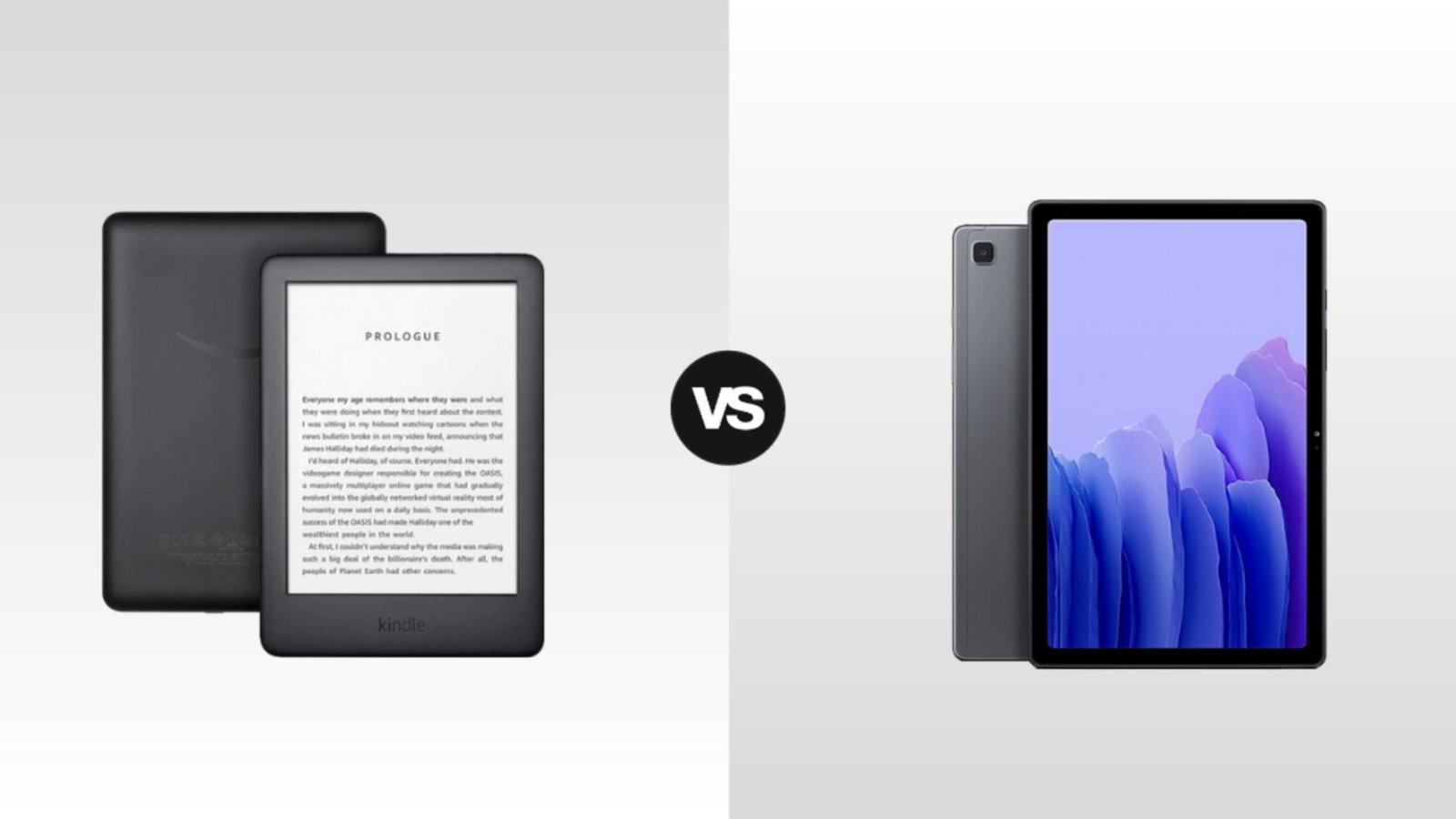
For the dedicated bookworm, the choice between an E-Reader vs. Tablet is more than just a tech decision—it’s a choice about your entire reading experience. As technology has evolved, both devices offer a gateway to vast digital libraries, but their fundamental designs cater to vastly different needs. An avid reader, someone who spends countless hours immersed in stories, requires a tool optimized for that singular, crucial task: reading comfort and longevity.
While the modern tablet promises an all-in-one experience—a digital Swiss Army knife for work, entertainment, and communication—the e-reader remains the undisputed champion for pure, unadulterated reading. Its specialized technology and single-purpose focus create an environment that minimizes eye strain and maximizes immersion, proving that sometimes, less is truly more.
Let’s dive deep into the technical and practical comparison of an E-Reader vs. Tablet to help you determine which digital companion belongs in your carry-on bag, by your bedside, or in your favorite reading nook.
Table of Contents
The Core Difference: Display Technology
The most significant and defining factor in the E-Reader vs. Tablet debate is the screen. This is where the devices diverge completely, and it directly impacts the user’s reading comfort.
The E-Reader’s Advantage: E Ink Technology
E-readers utilize a technology called E Ink (electronic ink) or e-paper. This is not a standard computer screen. E Ink displays are non-emissive, meaning they do not shine light into your eyes. Instead, they operate by reflecting ambient light, much like a physical page of a printed book.
- Mimics Paper: E Ink is composed of millions of tiny microcapsules, each containing positively charged white particles and negatively charged black particles. An electrical charge moves these particles to the surface to form text and images. Once the “page” is set, the screen requires no power to maintain the image (a quality called “bistability”), hence the paper-like appearance and incredible power efficiency.
- Superior Readability in Sunlight: Because e-readers rely on reflected light, they excel in bright outdoor conditions. The brighter the sun, the clearer the display becomes—a stark contrast to glossy, backlit screens that are nearly impossible to read at the beach or by the pool. For a more detailed look at the science, you can check out this article on the features and benefits of E Ink technology on a high-traffic tech site like Wikipedia on E Ink.
- Reduced Eye Strain and Blue Light: The lack of a flickering backlight eliminates a major cause of eye fatigue and headaches associated with extended screen time. While modern e-readers often include an adjustable front-light for reading in the dark, this light is directed onto the screen and reflects back to your eyes, rather than shining directly into them. Furthermore, many contemporary models feature adjustable color temperature—often called ‘warm light’—which can shift the display away from the blue end of the light spectrum to further enhance comfort for late-night reading sessions.
The Tablet’s Display: LCD and OLED
Tablets, whether running on iOS or Android, use emissive displays (LCD or OLED). These screens work by shining light through colored pixels to create the image.
- Vibrant and Colorful: The emissive screen is fantastic for multimedia. It provides rich colors, high refresh rates, and the necessary brightness for viewing photos, watching movies, and playing graphically intense games.
- Glare and Eye Strain: This very feature is their weakness for dedicated reading. The backlit display can cause significant eye strain, especially during long reading sessions. While features like “Night Mode” or “Night Shift” can reduce blue light, they don’t fundamentally change the emissive nature of the screen. Reading on a tablet outdoors is often a frustrating battle against sun glare and reflections.
Uninterrupted Immersion: Battery Life and Distraction
The reading experience isn’t just about what you see; it’s also about what you don’t see—namely, a low-battery warning or an incoming notification. This is where the dedicated e-reader secures another major victory in the E-Reader vs. Tablet contest.
The E-Reader: Weeks of Reading Freedom
E-readers offer revolutionary battery life. Thanks to E Ink’s bistable nature—only consuming significant power when turning a page, not to hold it—the battery life is measured in weeks, not hours.
- Long-Term Reliability: A single charge on a modern e-reader can last for an average of one to two months, based on half an hour of daily reading with the light on. This unparalleled longevity makes e-readers the perfect travel companion, eliminating the need to constantly worry about a charger. Imagine packing for a two-week vacation and leaving the charging cable at home—a reality with an e-reader.
- The Anti-Distraction Machine: An e-reader is a single-purpose device. It doesn’t have email apps, social media notifications, or endless games. This focused design is a psychological boon for avid readers. It allows for a deep, concentrated dive into the text without the constant, attention-breaking pings of modern digital life. For tips on maximizing your digital focus, you might find this article on digital minimalism useful over at breezytips.
The Tablet: Constant Recharging and Notifications
Tablets, with their powerful processors, high-resolution color screens, and endless background apps, are power-hungry.
- Hours, Not Weeks: The average tablet battery life is typically around 8 to 12 hours of mixed use. If you dedicate your tablet solely to reading, you might stretch this, but it will still require daily or every-other-day charging.
- The Lure of Multitasking: The tablet’s greatest strength—its versatility—is the reader’s biggest enemy. You open a reading app, but the notification badge for a new email, the social media icon, or the temptation to watch a quick YouTube video becomes a persistent barrier to immersion.
Portability and Comfort: The Physical Experience
When you hold a book for hours, comfort and weight are critical. The digital world is no different. The difference in physical design between an E-Reader vs. Tablet speaks volumes about their intended use.
E-Reader: Lightweight and Ergonomic
E-readers are engineered to be lightweight and compact. They are designed for a comfortable, one-handed grip during extended reading sessions.
- Featherlight Portability: E-readers are often smaller and significantly lighter than tablets, mimicking the feel of a thin paperback. This makes them easy on the wrist, a major consideration for readers who routinely spend hours at a time with a book.
- Waterproof Options: Many premium e-readers are now waterproof, making them ideal for reading in the bath, by the pool, or at the beach—environments where you would never risk a general-purpose tablet.
Tablet: Heavier and Bulkier
A tablet is generally heavier and bulkier due to its larger screen, more robust internal components (processor, cameras, speakers), and larger battery.
- Physical Strain: Holding a heavier tablet for several hours can lead to physical discomfort and wrist fatigue, detracting from the reading pleasure.
- Larger Footprint: While great for viewing documents and videos, the larger form factor is often unnecessary for a standard novel.
Cost and Content Ecosystem
Price point and access to content also play a vital role when choosing between an E-Reader vs. Tablet.
E-Readers: Affordable and Content-Focused
E-readers are generally more affordable than multi-purpose tablets, starting at a lower price for entry-level models.
- Dedicated Bookstores: E-readers are deeply integrated with their respective ecosystems (e.g., Amazon’s Kindle store, Kobo store). While this can sometimes mean being locked into a specific retailer, it also means seamless access to a massive library of affordable e-books.
- Library Integration: Nearly all major e-reader brands now offer direct integration with public library services, allowing you to borrow digital books easily, a huge cost-saver for avid readers.
Tablets: Higher Upfront Cost, More Versatility
Tablets come with a higher initial price tag but offer unparalleled versatility.
- Value Proposition: If your usage extends far beyond reading—including video calls, graphic design, watching streaming services, or extensive web browsing—the tablet offers better overall value as an all-in-one device. For tips on how to choose tech accessories, visit breezytips.com/tech-accessory-guide.
- Better for Certain Content: Tablets with their vibrant color screens and larger displays are significantly better for reading media-rich content like graphic novels, magazines, or textbooks with complex diagrams and photos. The slower refresh rate and grayscale display of most e-readers make them less suitable for color-heavy content.
Feature Comparison Summary
To provide a quick snapshot of the E-Reader vs. Tablet comparison, here is a detailed feature breakdown for the avid reader:
| Feature | E-Reader (E Ink) | Tablet (LCD/OLED) | Winner for Avid Readers |
| Display Type | Reflective E Ink/E-Paper | Emissive LCD/OLED Backlit | E-Reader (Paper-like comfort) |
| Eye Strain | Minimized; No flicker, Low/No Blue Light | High; Backlit screen, high blue light emission | E-Reader |
| Outdoor Readability | Excellent; No glare, best in bright sun | Poor; Heavy glare, screen washes out | E-Reader |
| Battery Life | Weeks (1-2 months on average) | Hours (8-12 hours on average) | E-Reader |
| Primary Function | Dedicated Reading | Multi-tasking (Apps, video, web) | E-Reader (Distraction-Free) |
| Weight/Portability | Very light, easy for one-handed hold | Heavier, more wrist strain for long sessions | E-Reader |
| Multimedia Content | Limited (Grayscale/Slow Refresh) | Excellent (Vibrant color, high resolution) | Tablet |
| Upfront Cost | Generally Lower | Generally Higher | E-Reader |
The Verdict: A Clear Choice for the Book Lover
When the sole purpose of the device is to facilitate a long, comfortable, and uninterrupted reading experience, the E-Reader vs. Tablet debate has a clear winner: the e-reader.
For the person who reads a book a week, takes their reading outside, or finds themselves easily distracted by notifications, the e-reader’s advantages are simply insurmountable:
- Eye Health: The non-emissive E Ink screen is incomparably easier on the eyes, allowing for marathon reading sessions without the associated fatigue of a backlit screen.
- Freedom: Weeks of battery life and extreme portability grant a true sense of digital freedom—no need to pack a charger, no anxiety about finding an outlet.
- Focus: The dedicated nature of the device promotes deep, distraction-free reading, which is the ultimate goal of any book lover.
If you are a casual reader who only reads for 30 minutes a day and also wants a device for video streaming, email, and social media, a tablet may be an acceptable compromise. But if you truly are an avid book lover whose main objective is to read more, the e-reader is not a luxury—it is a purpose-built tool that enhances and preserves the joy of reading.
Ultimately, the choice comes down to prioritizing. Do you prioritize a vibrant screen that can do everything? Choose the tablet. Do you prioritize a comfortable, focused, and long-lasting reading experience? The e-reader, with its revolutionary E Ink technology, is the device for you.
To keep up with the latest tech comparisons and see other essential digital tools, continue exploring breezytips.com. We always aim to provide you with the most accurate and practical advice. For more information on the long-term effects of screen time on eye health, consider visiting a reputable health information source like the American Academy of Ophthalmology for professional guidelines.