Skip to content
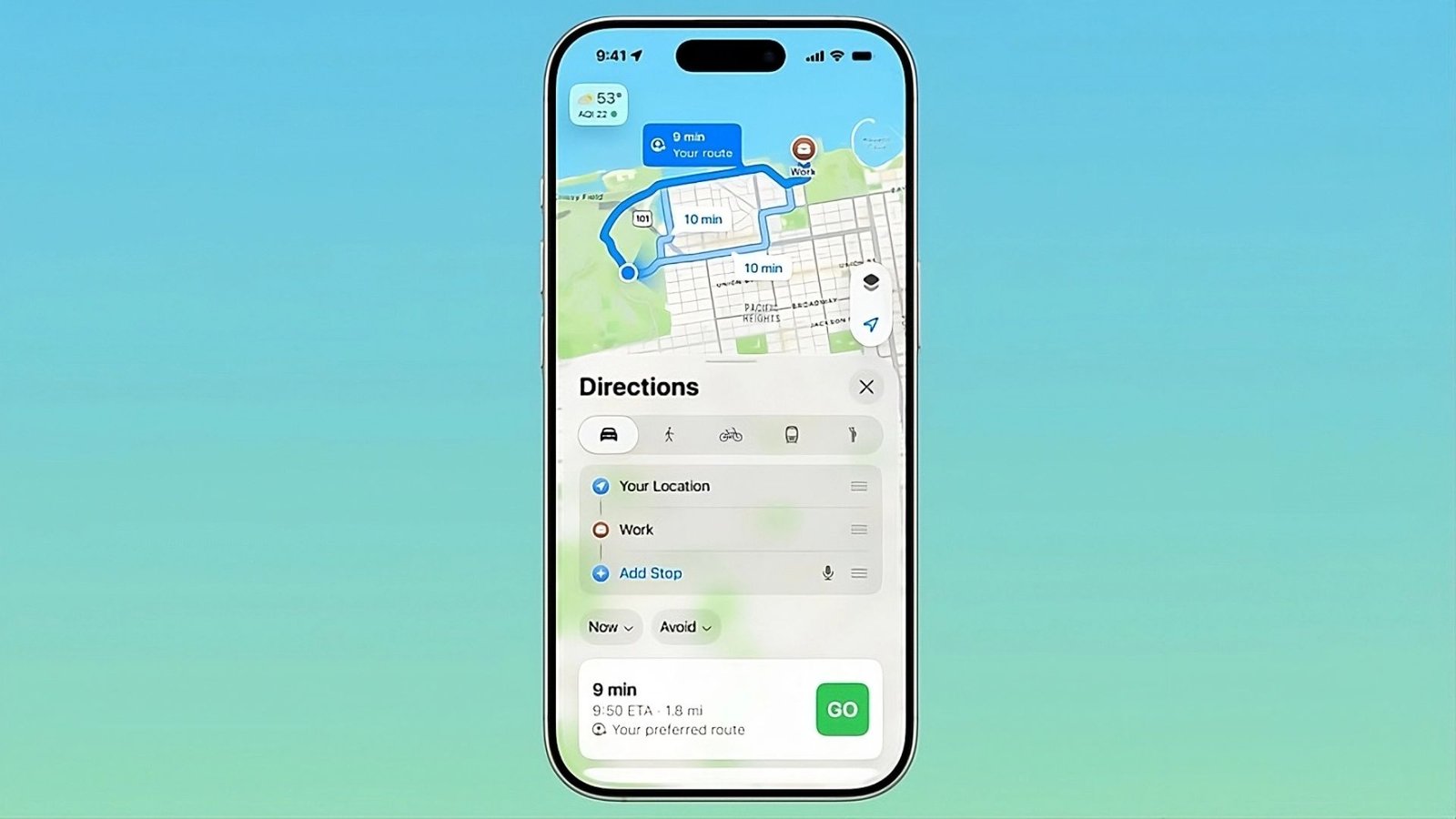
The digital map of the world is no longer a static directory; it is a dynamic, intelligent entity capable of understanding not just keywords, but context, intent, and nuance. With the rollout of Apple Maps iOS 26, Apple has ushered in a revolution for its navigation platform, one centered on the integration of its proprietary Apple Intelligence (AI) suite. The standout feature? A groundbreaking natural language search capability that finally lets users “Talk Naturally” to their map application.
The transition from rigid, keyword-based queries to fluid, human-like questions represents a massive leap for the user experience. No more fumbling with filters or trying to guess the right combination of terms. With Apple Maps iOS 26, your search becomes a conversation. This powerful upgrade positions Apple to seriously challenge its competitors and re-establish its map application as a core, indispensable feature of the iPhone experience. The implications for daily commutes, travel planning, and local business discovery are profound, making this one of the most exciting updates in the history of the iOS platform.
Table of Contents
The Dawn of Conversational Navigation in Apple Maps iOS 26
For years, searching in a mapping app was a functional but often frustrating exercise in reduction. You had to condense a complex thought—a specific set of needs—into a few simple keywords: “Italian restaurant,” “open late,” “outdoor seating.” You then had to apply filters, scroll, and cross-reference. All of that changes with the AI-powered search in Apple Maps iOS 26.
The new feature, officially part of the Apple Intelligence rollout, processes entire sentences and conversational queries. Imagine the old search for a dinner spot: you’d type “Pizza” and then manually tap filters for “rating 4+,” “open past 11 PM,” and “accepts reservations.”
With Apple Maps iOS 26, you can simply input (or speak) a query like: “Show me highly-rated pizza restaurants near me that have outdoor seating and are open after 10 PM tonight.”
The AI in Apple Maps iOS 26 is capable of parsing the distinct components of this complex request instantly:
- Place Type: Pizza restaurants.
- Quality Metric: Highly-rated (implying 4 stars or more).
- Specific Amenity: Outdoor seating.
- Time Constraint: Open after 10 PM.
This is a fundamental shift from a database lookup to an intelligent comprehension of user intent. It eliminates the friction points that previously existed between a user’s organic thought process and the mechanical requirements of the app interface. This level of contextual awareness and intent recognition has been available in parts of the operating system before, but its arrival in Apple Maps iOS 26 transforms the app into a genuinely proactive personal assistant for navigation and discovery.
How Apple Intelligence Powers the Maps Revolution
The enhanced search functionality in Apple Maps iOS 26 is a direct result of Apple’s deep integration of Apple Intelligence, the framework powering system-wide AI features. Unlike some cloud-dependent AI services, Apple has heavily emphasized that the intelligence operating within Maps—including the natural language search—is primarily driven by on-device processing. This commitment to privacy is a key differentiator and a cornerstone of the Apple Maps iOS 26 experience.
When a user phrases a complex request, the dedicated on-device neural engine processes the language model, breaks down the query, and cross-references it with local data and highly-encrypted map data. This method means the nuanced details of your personal, conversational searches—such as your precise needs for a café with a specific type of Wi-Fi—do not need to be uploaded to a central server for computation. This focus on privacy is central to the entire system (as detailed on the Apple Support page regarding Apple Intelligence).
The AI’s ability to understand conversational queries stems from the same powerful language tools used to power other new system features. These tools are also responsible for summarizing text, suggesting Smart Replies in Mail, and categorizing emails—essentially allowing the AI to grasp context and meaning, not just keywords. Users running Apple Maps iOS 26 for the first time on a supported device are likely to see a prominent popup with the header “Search the Way You Talk,” prompting them to try the new, intuitive method.
This AI upgrade isn’t isolated. It builds on the foundation laid by previous iOS versions, which saw similar AI enhancements to search in the Photos and Music apps. For example, the ability to search your photo library for a picture of “a cat wearing a party hat from last summer” using natural language laid the technological groundwork for the sophisticated semantic search now present in Apple Maps iOS 26.
Beyond Search: Other Key Quality-of-Life Upgrades in Apple Maps iOS 26
While the AI search is undeniably the headline feature, Apple Maps iOS 26 delivers a suite of other significant upgrades that collectively redefine the user experience, particularly around proactivity and personalization.
1. Preferred Routes and Proactive Commuting
Apple Maps iOS 26 introduces Preferred Routes, a feature powered by on-device intelligence that quietly learns your daily travel patterns. Maps will now recognize the specific routes you prefer to take for common journeys, such as your work commute or the school run, even if the app’s standard algorithm suggests a slightly different path. By understanding your habits, Apple Maps iOS 26 can proactively monitor real-time traffic and road closure data along your specific route. If a significant delay is detected, the app will send an alert, often before you even begin your journey, and suggest an optimal alternative. This shift from a reactive turn-by-turn guide to a proactive, predictive travel assistant is invaluable for saving time and reducing commute stress.
2. Visited Places History
For travelers, foodies, and those simply looking to retrace their steps, Apple Maps iOS 26 now includes a Visited Places history. This new feature automatically detects and securely logs the restaurants, shops, and landmarks you visit, complete with dates and details, storing them in your personal Library. Whether you want to recall the name of that incredible coffee shop you found on vacation or check the opening hours of a store you visited last week, the information is readily available within the app. Crucially, Apple emphasizes that this travel history is end-to-end encrypted and stored with the same on-device privacy safeguards applied to other personal data.
3. Enhanced CarPlay Integration
The driving experience is also markedly improved in Apple Maps iOS 26. The new update brings a cleaner, less invasive approach to notifications and a smoother interface. The previously mentioned Liquid Glass visual redesign, which updates buttons and UI elements across iOS, is fully integrated into CarPlay. More practically, calls and messages now appear in a compact strip at the bottom of the screen, ensuring that crucial navigation instructions—a sudden turn or a complex interchange—remain visible, minimizing distraction and improving road safety. Furthermore, for vehicles with modern multi-touch displays, Apple Maps iOS 26 on CarPlay finally supports advanced gestures like pinch-to-zoom for map manipulation, a long-awaited feature that streamlines map interaction on the road (read more about this unified experience on BGR).
Speaking of seamless integration, users interested in other hardware updates can find valuable analysis on Apple’s upcoming premium audio line by visiting our coverage of the AirPods Max 2.
The Competitive Edge: Apple Maps iOS 26 vs. Google Maps
Google Maps has long held the gold standard for mapping, particularly for its comprehensive point-of-interest data and established, reliable search. However, the introduction of AI-powered natural language search in Apple Maps iOS 26 represents the most significant feature-gap closure in years.
While Google Maps has also incorporated some degree of contextual search, the depth and on-device privacy focus of Apple Intelligence provides a compelling counter-argument. Google’s system, while powerful, is inherently cloud-centric. Apple’s approach ensures that highly personal, detailed queries—like searching for “the best vegan gluten-free bakery open on a Sunday afternoon with a quiet reading corner”—are processed directly on the iPhone, a privacy-first stance that resonates strongly with the core Apple user base. The new features in Apple Maps iOS 26, such as Preferred Routes and Visited Places, also lean into this private, personalized intelligence model, giving Apple a unique competitive vector that extends beyond simple turn-by-turn directions. For many users, the combination of advanced AI functionality with guaranteed data protection will finally tip the scales toward making Apple Maps iOS 26 their default navigation choice.
SEO Implications: Optimizing Local Business for Apple Maps iOS 26
The shift to natural language search in Apple Maps iOS 26 has critical implications for local businesses and the world of Search Engine Optimization (SEO). Previously, local SEO focused heavily on simple, high-volume keywords and category matching. Now, the emphasis must shift to detailed, descriptive, and accurate attribute data.
Focus on Attributes, Not Just Keywords
If a user searches for “a coffee shop with a good atmosphere for working with my laptop,” the business that shows up won’t just be the one with “coffee shop” in its name. The Apple Maps iOS 26 AI will prioritize businesses that have meticulously detailed their attributes: mentions of Wi-Fi, ample power outlets, quiet environment, and perhaps even tags for “study-friendly” or “work-from-cafe.”
Businesses must treat their Apple Business Connect profile (and its corresponding data aggregators) as a rich, descriptive data source, providing specific details that align with conversational queries. This includes updating information on:
- Amenities: Free Wi-Fi, Outdoor Seating, Pet-Friendly, Restrooms.
- Accessibility: Wheelchair ramps, accessible restrooms.
- Atmosphere: Casual, lively, quiet, good for groups.
The AI Search in Apple Maps iOS 26 essentially rewards honesty and detail. Businesses that are comprehensive and accurate will be the ones the natural language search surfaces for the increasingly complex demands of the modern consumer. For further analysis on the practical rollout of these features, authoritative sources like Tom’s Guide have offered deep dives into how the beta has performed in real-world scenarios.
Conclusion: A Smarter, More Human Apple Maps iOS 26
The arrival of AI-powered natural language search in Apple Maps iOS 26 is more than just a new feature; it is a fundamental redesign of how we interact with the digital world around us. By allowing users to speak their needs conversationally—without the mental gymnastics of keyword reduction—Apple has made its mapping application infinitely more intuitive and powerful.
Combined with proactive features like Preferred Routes and the organizational convenience of Visited Places, Apple Maps iOS 26 transforms from a simple navigation tool into a genuine, intelligent companion for daily life and travel. This update successfully leverages the power of Apple Intelligence while doubling down on the company’s core privacy principles. The era of conversational navigation is here, and Apple Maps iOS 26 is leading the charge, promising a smarter, more seamless, and distinctly more human way to explore the world.