Skip to content
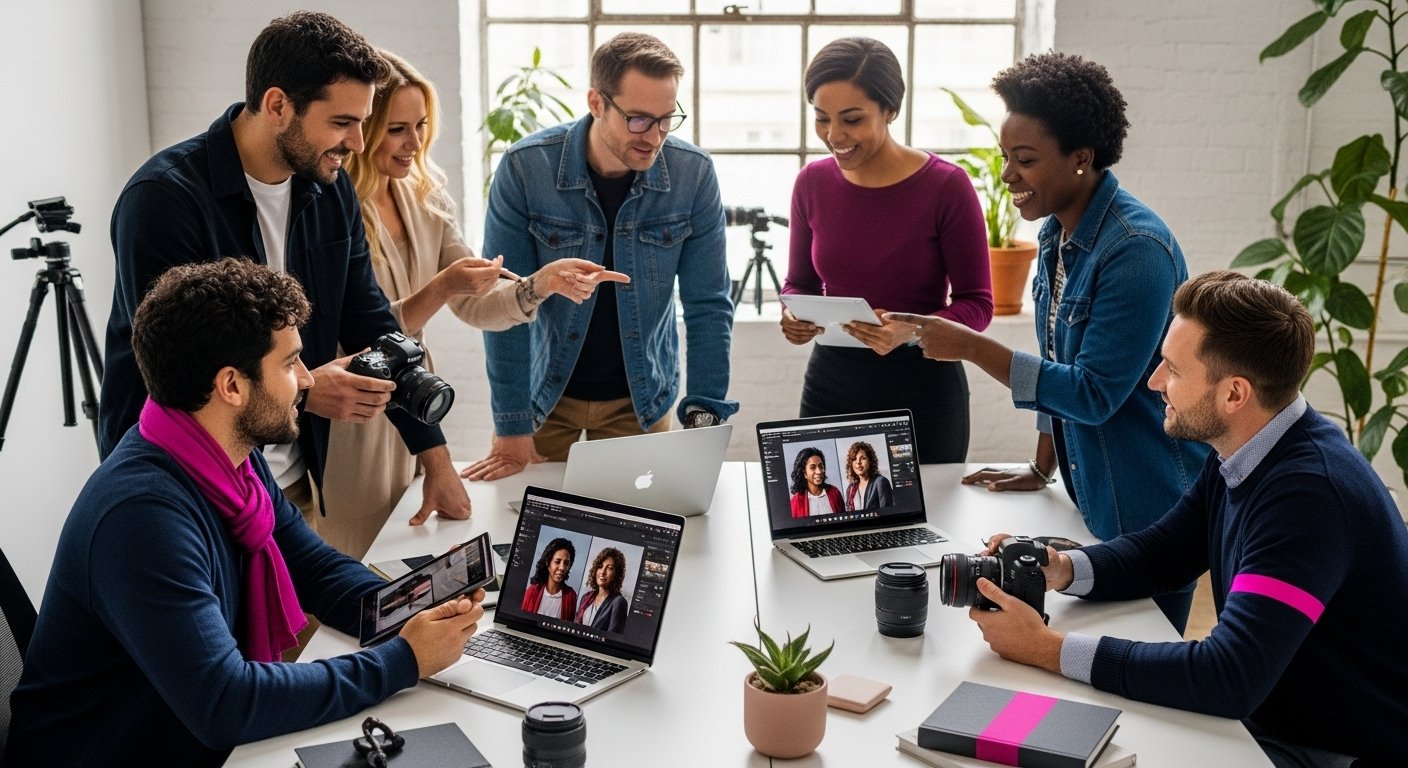
AI image enhancement is everywhere right now and it is changing how people rescue blurry or dull photos into eye-catching images. But get this. These systems can correct multiple image issues all at once by analyzing millions of photos at lightning speed. You might expect this power to come with a steep learning curve or huge price tag, yet even total beginners can use these tools for free and get professional-level results in seconds.
Table of Contents
- Understanding Ai Image Enhancement Techniques
- Top Free Ai Image Enhancers For Beginners
- Best Paid Ai Image Enhancers For Professionals
- How To Choose The Right Ai Image Enhancer For Your Needs
- Tips To Maximize The Use Of Ai Image Enhancers
- Comparing Features Of Popular Ai Image Enhancers
- Future Trends In Ai Image Enhancement Technology
Quick Summary
| Takeaway | Explanation |
|---|---|
| AI enhances image quality dramatically. | By utilizing machine learning algorithms, AI tools can significantly improve various aspects of photographs, making them look more professional. |
| Free tools are user-friendly for beginners. | Several accessible AI image enhancers allow novices to upgrade image quality without advanced skills or financial costs. |
| Paid tools offer advanced features for professionals. | Professionals benefit from sophisticated capabilities that provide high-quality results and greater efficiency in their workflows. |
| Selection criteria guide the right tool choice. | Users should evaluate tools based on features, budget, technical skills, and desired output to find the best option for their needs. |
| Experimentation maximizes AI tool effectiveness. | Testing different settings and techniques can help users achieve optimal results with AI image enhancement software. |
1: Understanding AI Image Enhancement Techniques
AI image enhancement represents a powerful technological breakthrough that transforms how photographers and visual creators improve image quality. By leveraging advanced machine learning algorithms, these sophisticated tools can dramatically upgrade photographs that might otherwise seem ordinary or technically imperfect.
At its core, AI image enhancement uses complex neural networks trained on millions of high-quality images to analyze and reconstruct visual data. These intelligent systems can identify and correct multiple image quality issues simultaneously, such as noise reduction, sharpness improvement, color balance adjustment, and resolution upscaling.
Research from IEEE indicates that deep learning architectures have revolutionized image processing by providing unprecedented levels of detail restoration and quality enhancement. The primary techniques utilized in AI image enhancement include:
-
Super-resolution algorithms that intelligently increase image resolution without introducing artifacts
-
Noise reduction models that clean up grainy or low-light photographs
-
Color correction techniques that automatically balance and optimize color palettes
-
Detail enhancement mechanisms that sharpen edges and restore lost image information
Unlike traditional image editing tools that apply uniform filters, AI-powered solutions analyze each pixel contextually. This means the enhancement process becomes intelligent and adaptive, understanding the specific characteristics of individual images.
The breakthrough in these technologies comes from machine learning models trained on extensive image datasets. These models learn intricate patterns of what constitutes a high-quality image, enabling them to make sophisticated restoration and enhancement decisions that mimic human visual perception—but often with greater precision and consistency.
Photographers, graphic designers, and even casual users can now access powerful AI tools that transform mediocre images into professional-grade visuals with just a few clicks. Whether you’re recovering old family photographs, improving smartphone snapshots, or preparing images for professional presentations, AI image enhancers offer remarkable capabilities that were unimaginable just a few years ago.
2: Top Free AI Image Enhancers for Beginners
For newcomers exploring AI image enhancement, several accessible and user-friendly tools can transform amateur photographs into professional-looking images without requiring advanced technical skills or significant financial investment. Beginners can now leverage powerful AI technologies to dramatically improve their visual content with minimal effort.
Research from the NIH Library highlights the growing accessibility of AI tools for image processing, making these technologies more approachable for individuals with limited technical background.
When selecting a free AI image enhancer, beginners should consider several key factors:
- Ease of use and intuitive interface
- Quality of image restoration
- Processing speed
- Supported file formats
- Additional editing features
Most free AI image enhancers operate through simple upload-and-process workflows, allowing users to quickly improve image quality without complex technical knowledge. These tools typically use advanced neural networks to analyze and reconstruct images, addressing common issues like low resolution, noise, and color inconsistencies.
Free AI image enhancement platforms democratize professional-level image editing, enabling photographers, designers, and casual users to elevate their visual content without expensive software subscriptions. Many of these tools offer web-based interfaces, meaning users can enhance images directly from their browsers without downloading additional software.
Key advantages of using free AI image enhancers include:
- Zero cost entry point for image improvement
- Instant image quality upgrades
- No requirement for advanced technical skills
- Accessibility across multiple devices
While free tools might have limitations compared to paid professional software, they provide an excellent starting point for individuals looking to explore AI-powered image enhancement. As technology continues to advance, these tools are becoming increasingly sophisticated, offering remarkable image restoration capabilities that were previously available only to professional photographers and graphic designers.
3: Best Paid AI Image Enhancers for Professionals
Professional photographers and graphic designers require advanced AI image enhancement tools that offer precision, comprehensive features, and exceptional image quality restoration. Paid AI image enhancers provide sophisticated technologies that go beyond basic image improvements, delivering professional-grade results that meet the most demanding visual standards.
Stanford University’s IT Training highlights the critical role of advanced AI tools in professional image editing workflows, demonstrating how these technologies transform image processing capabilities.
Professionals seeking top-tier AI image enhancement should evaluate tools based on several critical criteria:
- Advanced machine learning algorithms
- Batch processing capabilities
- High-resolution output quality
- Comprehensive editing features
- Integration with professional software
Paid AI image enhancers typically offer more robust and nuanced image restoration capabilities compared to free alternatives. These tools utilize complex neural networks trained on extensive professional image datasets, enabling them to perform intricate image improvements with remarkable accuracy.
The most advanced paid AI image enhancers distinguish themselves through specialized features that address specific professional requirements. These may include ultra-high-resolution upscaling, precise noise reduction, advanced color correction, and intelligent detail reconstruction.
Key advantages of investing in professional-grade AI image enhancement tools include:
- Unparalleled image quality restoration
- Significant time savings in post-processing
- Professional-level editing capabilities
- Consistent and repeatable results
Professional photographers, graphic designers, and visual content creators can leverage these powerful AI tools to elevate their work, transforming ordinary images into extraordinary visual experiences. The investment in paid AI image enhancers represents a strategic decision to access cutting-edge technology that can dramatically improve workflow efficiency and image quality.
4: How to Choose the Right AI Image Enhancer for Your Needs
Selecting the appropriate AI image enhancer requires careful consideration of multiple factors that align with your specific visual editing requirements. Professional and amateur photographers alike need to evaluate tools based on their unique workflow and image processing needs.
Purdue University’s AI Tool Evaluation Guide provides comprehensive insights into selecting technology tools that meet specific performance and usability standards.
When evaluating AI image enhancement tools, users should consider several critical factors:
- Your specific image enhancement requirements
- Budget constraints
- Technical skill level
- Desired output quality
- Compatibility with existing software
Professional-grade AI image enhancers differentiate themselves through advanced feature sets and precise restoration capabilities. Beginners might prioritize user-friendly interfaces, while advanced users will focus on granular control and sophisticated machine learning algorithms.
The selection process involves understanding your primary objectives. Are you restoring old photographs, preparing images for professional presentations, or creating high-resolution content for digital platforms? Each goal requires a nuanced approach to tool selection.
Financial considerations play a significant role in tool selection. While free tools offer basic functionality, paid solutions provide more comprehensive features and higher-quality image restoration. The investment in a professional AI image enhancer can dramatically improve your visual content’s overall quality.
Consider the following key evaluation criteria:
- Processing speed and efficiency
- Range of enhancement capabilities
- User interface intuitiveness
- Customer support quality
- Regular software updates
ultimately, the right AI image enhancer should seamlessly integrate into your existing workflow, providing intuitive tools that transform your visual content with minimal technical complexity. By carefully assessing your specific needs and comparing available options, you can find an AI image enhancement solution that elevates your photography and design capabilities.
5: Tips to Maximize the Use of AI Image Enhancers
Mastering AI image enhancement requires more than just selecting the right tool—it demands strategic approaches and technical understanding. Photographers and designers can significantly improve their results by implementing targeted techniques that unlock the full potential of AI-powered image processing.
Porter and Chester Institute’s Tech Hub highlights the sophisticated capabilities of AI image processing technologies, providing insights into maximizing tool effectiveness.
To achieve optimal results with AI image enhancers, users should focus on several key strategies:
- Start with high-quality original images
- Understand each tool’s specific strengths
- Experiment with different enhancement settings
- Compare multiple AI processing results
- Save original files before enhancement
Professional image enhancement goes beyond simple one-click solutions. Successful users develop a nuanced approach that involves understanding how different AI algorithms interpret and reconstruct visual information. This means carefully evaluating each enhancement iteration and making informed decisions about which processing techniques best suit specific image characteristics.
Technical considerations play a crucial role in maximizing AI image enhancement potential. Users should pay close attention to factors like image resolution, color depth, and file format compatibility. Some AI tools perform exceptionally well with specific image types, such as portrait photography, landscape images, or architectural shots.
Additional best practices for AI image enhancement include:
- Always maintain backup copies of original images
- Learn the technical capabilities of your chosen AI tool
- Understand the limitations of AI image processing
- Develop a consistent workflow for image enhancement
Successful AI image enhancement requires a combination of technical knowledge, artistic vision, and strategic experimentation. By approaching these tools with curiosity and precision, photographers and designers can transform ordinary images into extraordinary visual experiences that meet professional standards.
6: Comparing Features of Popular AI Image Enhancers
The landscape of AI image enhancement tools presents a diverse array of capabilities, each offering unique strengths for different photographic and design requirements. Professional and amateur users must carefully evaluate these tools based on their specific image processing needs.
Research on Text-to-Image Models reveals the complex evaluation process involved in assessing AI image generation and enhancement technologies, highlighting the nuanced nature of comparing these sophisticated tools.
When comparing AI image enhancers, users should consider several critical performance metrics:
- Resolution improvement capabilities
- Noise reduction effectiveness
- Color accuracy and balance
- Processing speed
- Compatibility with different image formats
Advanced AI image enhancers distinguish themselves through intelligent algorithms that go beyond simple filtering, utilizing deep learning techniques to analyze and reconstruct image data with remarkable precision. The most sophisticated tools can restore details, correct color aberrations, and upscale images while maintaining natural visual characteristics.
Key differentiators among top AI image enhancement tools include their approach to machine learning, training datasets, and specialized processing capabilities. Some tools excel in portrait photography, while others shine in landscape or architectural image restoration.
Critical factors to evaluate when comparing AI image enhancers include:
- Batch processing capabilities
- User interface intuitiveness
- Machine learning model sophistication
- Price point and subscription models
- Regular software updates and improvements
Professional photographers and graphic designers require tools that not only improve image quality but also integrate seamlessly into their existing workflows. The ideal AI image enhancer should provide a balance between advanced technological capabilities and user-friendly design, enabling users to achieve professional-grade results with minimal technical complexity.
7: Future Trends in AI Image Enhancement Technology
The landscape of AI image enhancement is rapidly evolving, driven by breakthrough technologies that promise to revolutionize how we capture, process, and transform visual content. Emerging trends are pushing the boundaries of what’s possible in digital image restoration and manipulation, creating unprecedented opportunities for photographers, designers, and visual artists.
Emerging Trends in Computer Science highlights the transformative potential of advanced AI technologies in image processing, particularly through sophisticated machine learning algorithms.
Future AI image enhancement technologies are expected to focus on several groundbreaking developments:
- Real-time image processing capabilities
- Hyper-realistic detail reconstruction
- Advanced semantic understanding of visual content
- Ethical AI development
- Cross-platform integration
Generative Adversarial Networks (GANs) are set to play a pivotal role in next-generation image enhancement, offering unprecedented capabilities in generating and restoring visual content. These advanced neural networks can learn intricate patterns, enabling them to reconstruct images with remarkable accuracy and detail.
Artificial intelligence is moving beyond simple image restoration, developing more sophisticated approaches that understand contextual and semantic information within images. This means AI tools will not just improve visual quality but also comprehend the deeper meaning and structure of visual content.
Key anticipated advancements in AI image enhancement include:
- Quantum computing integration
- More sophisticated neural network architectures
- Enhanced privacy and security protocols
- Improved energy efficiency
- Greater accessibility across devices
The future of AI image enhancement represents a convergence of technological innovation, artistic expression, and computational power.
Below is a comprehensive table summarizing the main topics, key features, and benefits discussed in the article about AI image enhancers.
| Section / Topic | Key Points / Features | Benefits for Users |
|---|---|---|
| AI Image Enhancement Techniques | Uses machine learning, neural networks; techniques include super-resolution, noise reduction, color correction | Transforms ordinary images into professional-quality ones |
| Free AI Image Enhancers for Beginners | Easy interfaces, web-based, no advanced skills needed, instant improvements | Cost-free entry, accessible for novices, quick results |
| Paid AI Image Enhancers for Professionals | Advanced algorithms, batch processing, deep editing, seamless workflow integration | High-end restoration, workflow efficiency, superior output |
| How to Choose the Right Tool | Consider specific needs, budget, skill level, output quality, software compatibility | Find best fit for goals and maximize value |
| Maximizing AI Tool Effectiveness | Start with quality images, experiment with settings, compare results, maintain originals, know limitations | Achieve optimal enhancements, consistent high results |
| Comparing Popular Tools | Evaluate resolution, noise reduction, color accuracy, processing speed, batch features, subscription costs | Pick tools that match your workflow and editing needs |
| Future Trends | Focus on real-time processing, advanced neural networks (GANs), ethical AI, quantum integration, device accessibility | Expect smarter, more intuitive, and powerful enhancements |
| As these technologies continue to develop, users can expect increasingly intelligent, intuitive, and powerful tools that transform how we interact with and create visual content. |
Transform Your Photos and Daily Life with BreezyTips
You want your images to look sharp and professional, but navigating the world of AI image enhancers can be difficult. Many readers struggle with unclear software, confusing workflows, and inconsistent results when trying to improve their photos. The article discusses how AI-driven tools can solve these pain points, offering super-resolution, noise reduction, and easy color correction for anyone seeking better visual content.
If you are eager to make your tech tools work for you, Home is here to help. We provide clear, step-by-step guides on everything from fixing streaming errors to mastering new lifestyle hacks. Dive into our Home to find solutions that simplify both your technology and home routine. Ready to elevate your daily productivity and photo skills? Visit Home now and discover easy ways to make the most of your digital and everyday life.
Frequently Asked Questions
What are AI image enhancers?
AI image enhancers are software tools that use advanced machine learning algorithms to improve the quality and appearance of photographs by correcting issues such as noise, resolution, color balance, and sharpness.
How do I choose the right AI image enhancer for my needs?
To select the best AI image enhancer, consider factors such as your specific enhancement requirements, budget, technical skill level, the desired quality of output, and compatibility with existing software.
Are there free AI image enhancers available for beginners?
Yes, several free AI image enhancers exist that are user-friendly and can significantly improve images without requiring advanced technical skills, allowing amateurs to achieve professional-looking results with minimal effort.
What are the advantages of using paid AI image enhancers?
Paid AI image enhancers generally provide more advanced features, higher-quality restoration capabilities, batch processing, and integration with professional software, making them suitable for professional photographers and designers seeking superior image quality.