Skip to content
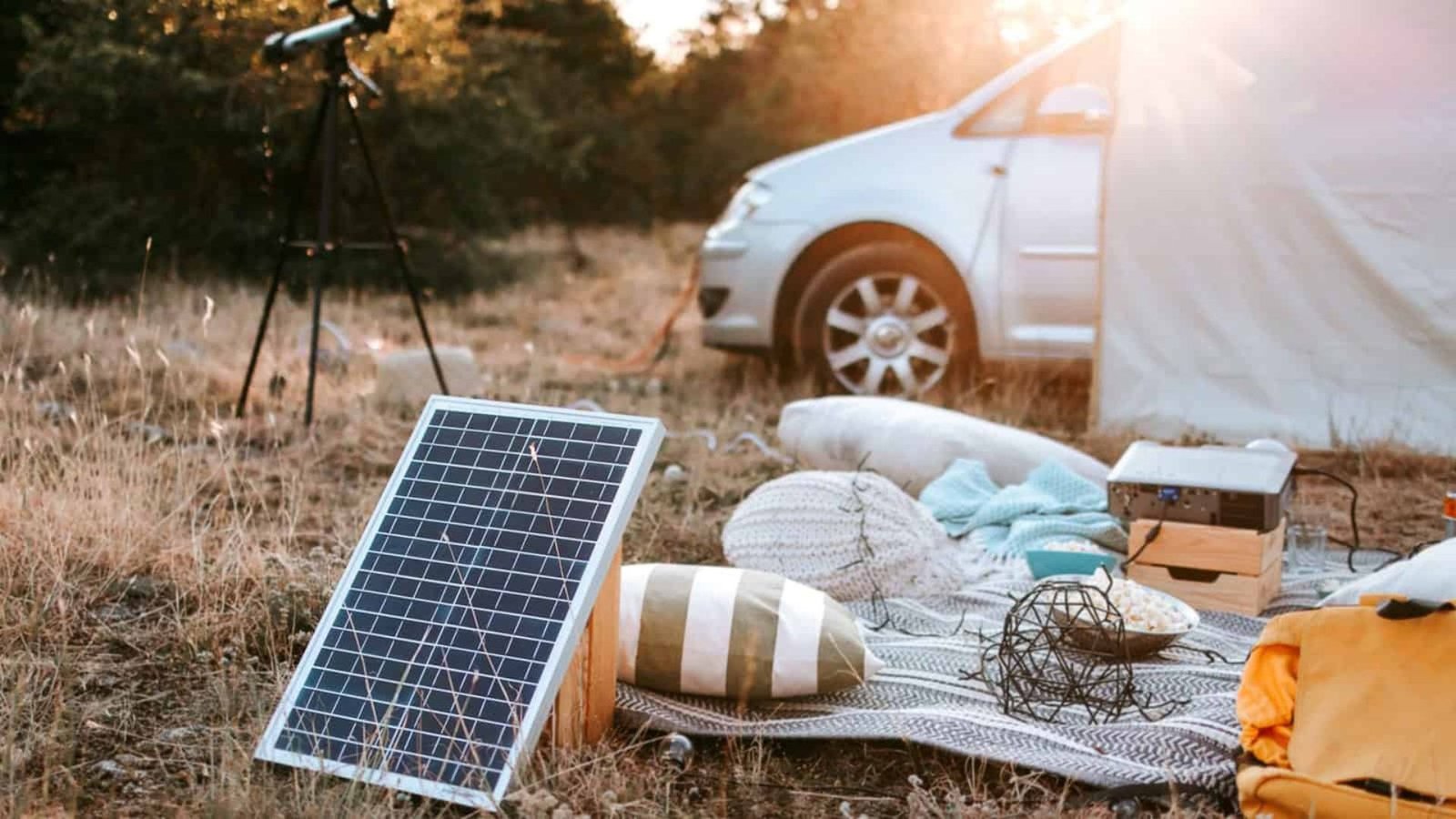
The appeal of camping is the freedom of disconnecting—leaving the concrete jungle and finding peace in the wilderness. But disconnecting from the city doesn’t have to mean disconnecting from essential power. In the age of digital maps, safety communication, and high-tech gear, reliable power is non-negotiable for an authentic and safe off-grid trip.
This is where Solar Gadgets shine. They harness the most abundant energy source on the planet—the sun—allowing you to keep your phone charged, your campsite lit, and your navigation running without hauling heavy generators, fuel, or single-use batteries. From ultra-lightweight power banks to powerful foldable panels, integrating Solar Gadgets into your kit is the key to true self-sufficiency in the wild.
Table of Contents
The Foundation of Off-Grid Power: Portable Solar Panels & Power Stations
The heart of any successful solar camping setup is the combination of an efficient charging source (the panel) and a reliable storage unit (the power station or bank). Understanding the synergy between these two components is crucial for choosing the right gear for your trip.
1. The Portable Solar Panel: Your Energy Harvester
Gone are the days of rigid, heavy solar cells. Modern portable panels are designed for the adventurer:
- Foldable Design: Most panels now feature a multi-panel, accordion-style fold-out design, making a 100W panel pack down into the size of a large laptop.
- High Efficiency: The best panels use monocrystalline cells with conversion efficiencies often exceeding 20% to 24%. This means they capture more energy from a smaller surface area, reducing the weight and size you have to carry.
- Weight is King: For backpackers, look for ultra-lightweight panels (sometimes called flexible or rollable panels) which can weigh as little as 1-2 kg for a 40W unit. For car campers or RV owners, heavier, more durable framed panels (up to 200W or 400W) are the better choice for their power output.
Pro Tip: When choosing a portable solar panel, always check the IP rating (e.g., IPX4 or IP65), which indicates its resistance to dust and water. Weather resistance is non-negotiable for outdoor gear!
2. The Portable Power Station (Solar Generator)
A power station acts as a large, rechargeable battery that accepts the solar input and converts it into usable energy formats—AC outlets (for small appliances), DC ports (for car accessories), and multiple USB ports.
- Capacity (Wh): This measures how much energy the station holds.
- Weekend Trips (200Wh – 500Wh): Perfect for charging phones, laptops, and running camp lights for 2-3 days. Devices like the EcoFlow River 3 series often fall into this category, balancing portability and power.
- Extended Trips / Remote Work (1000Wh+): Necessary for running things like mini-fridges, CPAP machines, or prolonged laptop use. Stations like the Anker Solix C1000 offer high capacity and rapid solar recharge times.
- Output (W): This measures how much power the station can deliver at any one time. Make sure this rating exceeds the power draw of your largest appliance (e.g., a hair dryer or large electric kettle would require a high wattage output).
Pairing the right size panel with the right size power station is essential for your off-grid success. If you’re planning on relying on high-tech devices like satellite communicators or drones during your trip, ensuring your solar setup can handle the charging demands is paramount. For guidance on calculating your total power needs and the right sizing, review our detailed guide on our website.
Beyond Charging: Multi-Function Solar Gadgets
The true versatility of Solar Gadgets lies in devices that combine power generation with another essential camping function, reducing clutter and weight in your pack.
3. Solar Charger Power Banks (The Essential Backup)
These are the most popular and affordable solar camping gadgets. They feature a built-in battery pack and a small integrated solar panel.
- Primary Use: Charging phones and small USB devices.
- Solar Reality: The integrated solar panel is usually too small to fully recharge the bank from empty quickly; its primary role is to trickle-charge and maintain the battery’s level, or recover minimal charge in an emergency.
- Key Features: Look for models with high capacity (10,000mAh or more), rugged shock-proof and waterproof casings, and an integrated LED flashlight for emergency lighting. The BLAVOR Solar Charger Power Bank is a consistently top-selling product in this category for its reliability.
4. Solar Lanterns and Camp Lights
Say goodbye to constantly swapping AA batteries in flashlights.
- LuminAID PackLite Max: One of the best-reviewed options. These are collapsible, inflatable lanterns that pack flat and inflate to create a diffused, bright light source. They are waterproof, durable, and charge fully in a few hours of sunlight, providing up to 50 hours of light. Many models also include a USB port to charge a phone in a pinch.
- Solar String Lights: Perfect for creating a welcoming, atmospheric campsite. These decorative lights charge all day and automatically turn on at dusk, often providing enough ambient light to navigate your immediate area without needing a harsh headlamp.
5. Solar Showers and Cookers
Solar energy isn’t just for electronics—it can also make your life more comfortable and efficient.
- Solar Showers: These are essentially black PVC bags that hold water and, when left in the sun, use solar thermal gain to heat the water to a comfortable temperature (often 100°F or more) in just a few hours. They feature a hose and shower head, making personal hygiene simpler and warmer in the wilderness.
- Solar Cookers/Ovens: Devices like those made by GoSun use vacuum-sealed glass tubes and parabolic reflectors to concentrate sunlight, allowing you to bake, boil, or fry food without fuel. This is a genuinely off-grid cooking solution, ideal for sunny climates and long-term base camps.
The Strategic Importance of Solar for Safety and Communication
While having power for entertainment is nice, the most important benefit of Solar Gadgets is the ability to maintain communication and safety devices when you are miles away from the nearest wall socket.
Emergency Communication and Navigation
- Satellite Communicators (e.g., Garmin inReach Mini): These life-saving devices allow you to send SOS signals and two-way text messages even when far outside cell service range. Their batteries are crucial, and a small, dedicated solar charger ensures they are always ready.
- Solar Emergency Radios: These multi-function tools are a must-have for any emergency kit. They often feature:
- AM/FM/NOAA Weather Radio: For receiving vital weather alerts and news.
- Solar Panel: For recharging the internal battery.
- Hand Crank: As a mechanical backup to solar power.
- Flashlight/USB Charger: To top up a phone in an emergency.
Reliable off-grid communication is the bedrock of safe exploration. By keeping these essential Solar Gadgets charged, you maintain a crucial lifeline to the outside world, regardless of how remote your destination is. Reputable outdoor gear sites, such as REI Co-op, emphasize the importance of having portable power for GPS and emergency communications on their essential gear lists.
Maximizing Efficiency: Getting the Most Out of Your Solar Gear
Simply owning Solar Gadgets is not enough; you must use them efficiently to ensure you have power when you need it most.
Best Practices for Solar Charging
- Angle and Position: Always angle your portable solar panels to face the sun directly. This single factor can increase power output by as much as 30%. Use built-in kickstands or prop the panel up with rocks or gear.
- Avoid Obstruction: Ensure no shadows, trees, or objects are covering any part of the panel. Even a small shadow can drastically reduce the output of the entire panel array.
- Charge Early: The best charging hours are typically between 10:00 AM and 4:00 PM when the sun is highest. Utilize these peak hours to fully charge your power station or devices so you have plenty of reserve for the night.
- Use Charge Controllers: If you are connecting a large panel directly to a battery, ensure you use a charge controller to prevent overcharging, which can damage the battery and reduce its lifespan. Most modern power stations have this technology built-in.
Conclusion: The Path to Sustainable Off-Grid Freedom
Integrating Solar Gadgets into your camping gear is the most significant upgrade you can make for modern off-grid trips. It represents a shift from reliance on finite resources to embracing clean, renewable power. From the core power station that runs your camp fridge to the small solar lantern that lights your tent, these devices are the key to a safer, more sustainable, and ultimately more enjoyable wilderness experience. They provide the ultimate freedom: the knowledge that your power supply is as limitless as the sun itself.