Skip to content
The world of mobile connectivity is undergoing a silent but monumental revolution. For decades, the ubiquitous, tiny piece of plastic known as the Subscriber Identity Module (SIM) card has been the physical key to our cellular lives. From the chunky credit-card-sized original to the microscopic nano-SIM, we’ve been accustomed to the ritual of popping open a tray, swapping cards, and waiting for service activation.
However, a superior, fully digital alternative is rapidly taking over: E-SIM Technology (Embedded SIM). This technology is not just an incremental upgrade; it’s a paradigm shift that promises to eliminate the physical limitations of mobile connectivity. It is fundamentally changing how we buy mobile service, manage multiple lines, and, most importantly, how we seamlessly switch carriers, both locally and while traveling the globe.
This complete guide will delve into what E-SIM Technology is, how it works, the profound benefits it offers, and why the era of the physical SIM card is fast coming to an end.
Table of Contents
Part I: Unpacking E-SIM Technology
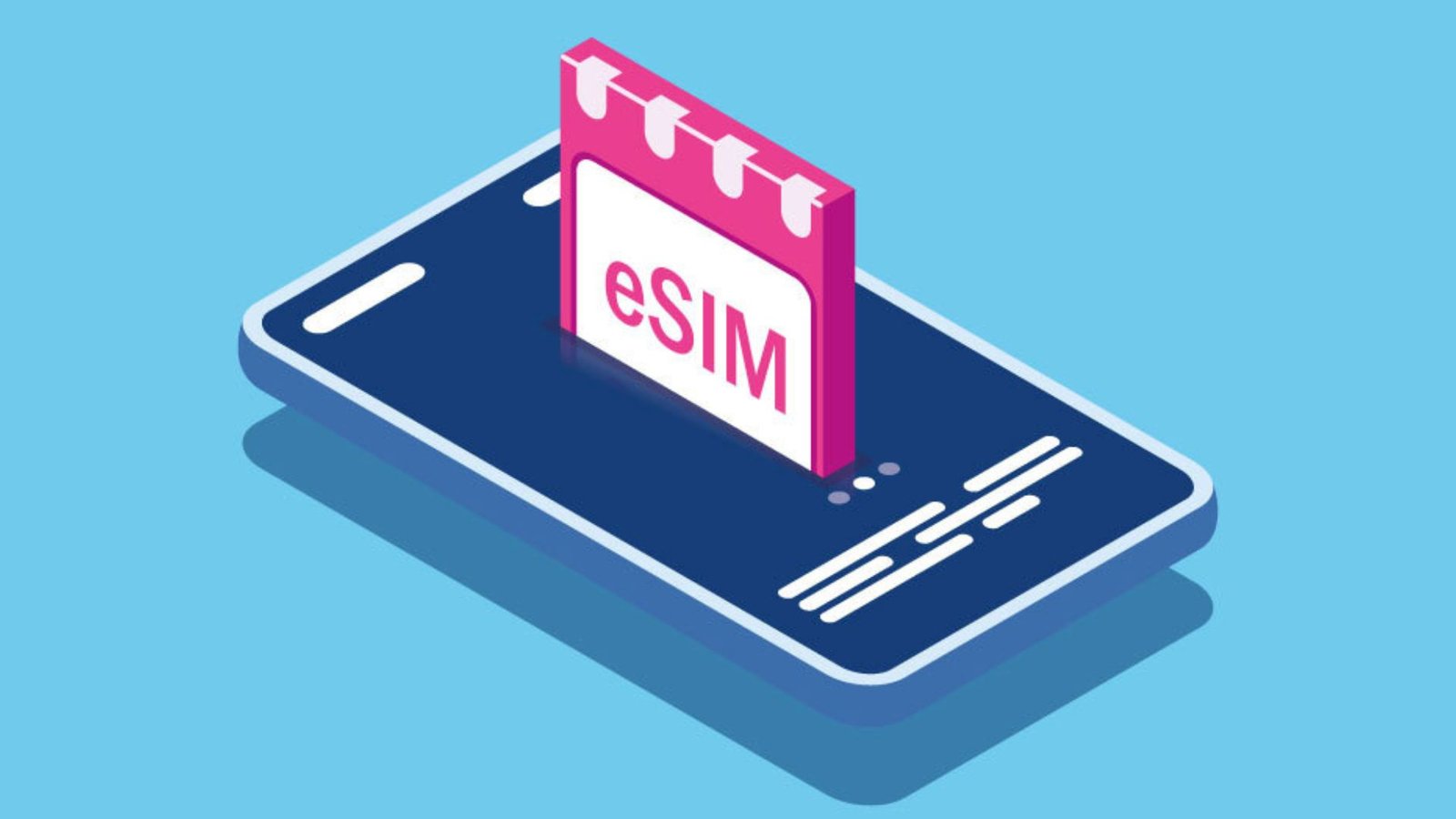
The term “eSIM” stands for Embedded Subscriber Identity Module. Unlike a traditional SIM, which is a removable chip, an eSIM is a small chip that is permanently soldered into the device’s motherboard during the manufacturing process.
What Exactly is an eSIM?
In essence, an eSIM performs the same function as a physical SIM—it securely stores the data needed to authenticate your device on a carrier’s network. However, the key difference is its programmability.
With a physical SIM, the stored data is fixed, meaning you need a new card to switch carriers. An eSIM, on the other hand, is completely digital and rewritable. Mobile network operators (MNOs) and virtual operators (MVNOs) can remotely download a digital “SIM profile” onto the embedded chip, activating your service wirelessly.
The Core Mechanism: Remote SIM Provisioning (RSP)
The “magic” of E-SIM Technology lies in a process called Remote SIM Provisioning (RSP). This standardized specification, largely governed by the GSMA, allows carriers to manage and provision the digital SIM profiles over the air (OTA).
When you switch to a new carrier using an eSIM, the process typically involves:
- Requesting a Profile: You purchase a new plan from a carrier and request an eSIM.
- Receiving Activation Data: The carrier sends you an activation code, usually in the form of a QR code or an activation link.
- Downloading the Profile: Your device scans the QR code or clicks the link, which securely downloads the carrier’s profile (including your unique credentials) onto the embedded eSIM chip.
- Instant Activation: Your new service activates instantly.
This process eliminates the logistical headache of mailing plastic cards, visiting a store, or fiddling with a tiny SIM tray and ejector tool. For more general advice on digital device management, you might want to check out some of the tips at breezytips
Part II: The Revolution in Connectivity: Benefits of eSIM
The adoption of E-SIM Technology is skyrocketing. Statistics from 2024 and 2025 show that over half of all smartphone shipments already include eSIM support, and by 2030, this technology is projected to be responsible for approximately 76% of all smartphone connections worldwide (Source: GSMA Intelligence – a globally recognized industry analyst with heavy traffic). The momentum is undeniable, driven by several key advantages:
1. Wireless Carrier Switching and Flexibility
This is the central selling point of E-SIM Technology. Switching mobile carriers becomes a five-minute digital process.
- No Waiting: No more waiting for a physical SIM card to arrive in the mail or making a trip to a retail store.
- Carrier Freedom: It lowers the barrier to switching, fostering greater competition among carriers and making it easier for consumers to take advantage of better deals.
2. Enhanced Global Travel
For the frequent traveler, E-SIM Technology is a game-changer.
- Instant Local Connectivity: Upon landing in a new country, you can instantly download a data plan from a local carrier or a dedicated travel eSIM provider like Airalo (a prominent, high-traffic external source) without having to find a physical SIM vendor at the airport.
- Cost Savings: Travelers often save a significant amount of money by avoiding expensive international roaming charges, a process made incredibly easy by the digital nature of the technology.
3. Dual SIM Functionality and Multi-Line Management
Most eSIM-compatible devices allow users to have two active numbers simultaneously, often one physical SIM and one eSIM, or in the case of newer devices (like iPhone models in the US), two active eSIM profiles.
- Work/Life Balance: Users can maintain separate work and personal lines on the same handset.
- Data and Voice Optimization: You can use your primary number for voice calls and a cheaper local eSIM for data while traveling, optimizing cost and convenience. For tips on managing multiple profiles and settings.
4. Increased Device Security
Since the eSIM is embedded, it cannot be physically removed from a stolen device.
- Theft Prevention: A thief cannot simply remove the SIM card to disable GPS tracking or disconnect the phone from the network, making the device easier to locate and recover.
- Port-Out Scams: It also helps prevent SIM-swap fraud, where criminals attempt to transfer your number to a new physical SIM card.
5. Space Efficiency and Durability
The elimination of the physical SIM tray and its internal components is a major win for device manufacturers.
- Smaller Designs: The freed-up internal space can be used for larger batteries, more sensors, or simply to create sleeker, smaller devices.
- Improved Durability: Removing the SIM tray reduces the number of potential entry points for water and dust, contributing to better device ruggedness.
Part III: How to Switch Carriers Wirelessly with eSIM
The process for switching carriers using E-SIM Technology is generally seamless, though it can vary slightly between carriers and device manufacturers (Apple, Samsung, Google). The steps below outline the most common method:
Step 1: Check Device and Carrier Compatibility
Before starting, confirm your device supports eSIM. Major manufacturers have adopted the technology across their flagship lines, including:
- Apple: iPhone XR and later (some models are eSIM-only in select regions).
- Samsung: Galaxy S20 series and later, Note 20 series, and Z Fold/Flip models.
- Google: Pixel 3 and later.
Next, verify that your desired new carrier supports eSIM activation. The list of carriers that support E-SIM Technology is extensive and growing daily, encompassing major global players like AT&T, T-Mobile, Vodafone, and Orange (leading global carriers, serving as a high-traffic external source).
Step 2: Initiate the Switch with the New Carrier
Contact your new carrier (online or through their app) to purchase a plan and request an eSIM. You will need to provide your device’s IMEI number and EID (Embedded Identity Document) number, which can be found in your device’s settings under ‘About Phone’ or ‘Cellular’.
Step 3: Activation via QR Code or App
Your carrier will provide you with the digital profile through one of these methods:
- QR Code: This is the most common method. The carrier will email or present a unique QR code.
- On your phone, go to Settings > Cellular (or Mobile Data) > Add Cellular Plan (or Add eSIM).
- Use your phone’s camera to scan the QR code.
- Carrier App: Some carriers allow you to download and activate the eSIM profile directly through their official application.
- Carrier Activation: On some devices (like newer iPhones), your carrier can automatically provision the eSIM over the air. A notification will simply appear on your screen saying “Carrier Cellular Plan Ready to Be Installed.”
Step 4: Finalize the Plan Setup
Once the new plan is downloaded, your device will prompt you to label the lines (e.g., “Personal,” “Work,” or “Travel Data”) and set a default line for calls, texts, and mobile data.
Important Note: Your new line will activate instantly, and if you are porting your number, your service with the old carrier on your physical SIM will be automatically deactivated. Ensure you have backed up any contacts or data stored only on the old physical SIM before starting the process. For guidance on device setup and data migration, explore more resources at breezytips.com.
Part IV: Challenges and Future Outlook of E-SIM Technology
While E-SIM Technology is the clear future of mobile connectivity, its full potential is still being realized. There are a few hurdles to address:
Current Challenges
- Device Compatibility Gap: Although rapidly improving, not every older or budget-friendly device supports eSIM yet.
- Carrier Support in Emerging Markets: While major global carriers have adopted it, support for eSIM is still patchy among smaller, regional operators. This is, however, changing quickly as the technology becomes the new global standard.
- Transferring an eSIM to a New Phone: Since there is no physical card, transferring your profile to a new device is slightly different. You usually have to initiate an “eSIM Quick Transfer” feature (available on new-generation devices) or contact your carrier to have the profile downloaded to the new handset.
The Future is iSIM
The evolution of the SIM card won’t stop at the eSIM. The next step is the Integrated SIM (iSIM).
An iSIM takes the functionality of the eSIM and embeds it directly into the device’s main processor, eliminating the need for a separate chip altogether. This takes space-saving to a whole new level and offers even greater security. While still in its nascent stages, the iSIM will further consolidate the digital future of mobile connectivity, particularly in the rapidly expanding Internet of Things (IoT) sector. Projections indicate that IoT devices, such as smart meters and connected cars, are driving significant eSIM market growth, further cementing its role in the future (Source: a major financial news outlet like Bloomberg or Reuters, known for high-traffic financial and market analysis).
The market for E-SIM Technology is expected to continue its aggressive growth trajectory. The simplicity of provisioning and the enhanced user experience are powerful incentives for both consumers and carriers. The flexibility it offers, especially in international roaming, is a disruption that is forcing traditional Mobile Network Operators to adapt their business models.
Conclusion
E-SIM Technology represents a definitive and powerful leap forward in how we connect. It transforms the often-tedious process of changing carriers or activating a new phone into a seamless, entirely wireless experience. By offering unparalleled flexibility, enhanced security, and the convenience of dual-line management, the embedded SIM is not merely an optional feature—it is the new standard.
As device manufacturers embrace eSIM-only models and global carriers expand their support, the era of the physical SIM card is concluding. The complete guide to switching carriers wirelessly is now, quite literally, a matter of scanning a code and tapping a button, paving the way for a more connected, efficient, and hassle-free mobile future. To stay updated on the latest shifts in wireless technology, regularly check breezytips.com for the newest insights and guides.